

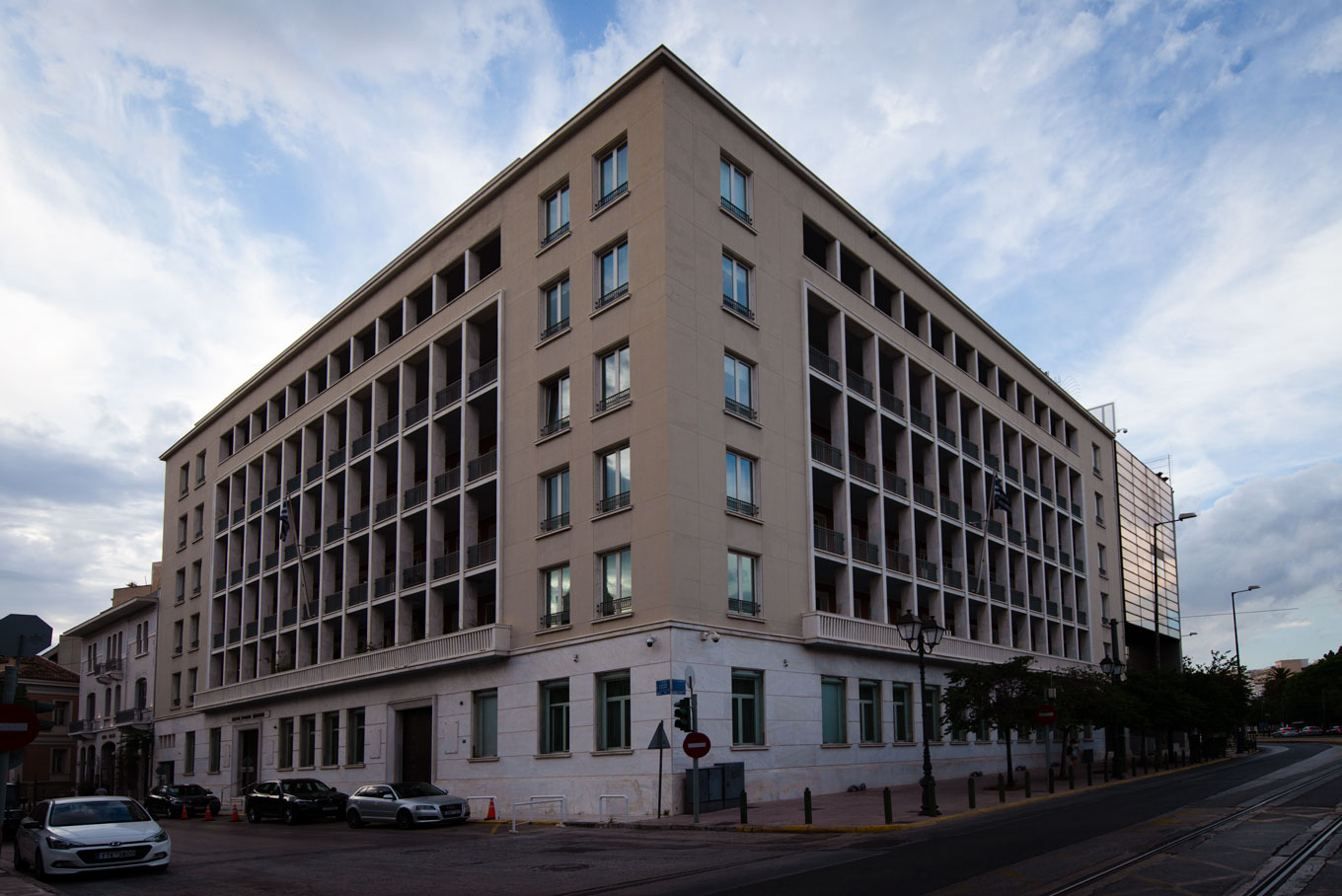
Address Souri 5, Αthens
Space Type Bodossaki Mansion
Area Syntagma
Time 20th century
History of the building
The exemplary symmetrical corner Bodossaki Mansion at 20 Amalia Avenue and 5 Souri Avenue is a historic building in Athens. Its construction began in 1949 and was completed in 1958 and bears the signature of Andreas Ploumistos, a founding member of the Hellenic Architectural Society. For many decades it was the headquarters of the powerful businessman Prodromos Athanasiadis, who went down in modern history as Bodosakis. The six-story Bodosaki Mansion is considered the best work of Andreas Ploumistos and his architectural designs bear his signature. It consists of a ground floor, 6 floors and 2 basements, having a total area of 13,460 sq.m. In the period 2005-2006 it was radically renovated. The building has an unobstructed view of the National Garden and also of the important landmarks of the city center including Lycabettus, the Parliament, Kallimarmaro, the Pillars of Olympian Zeus, and the Acropolis.
“It worthily represents bare classicism”, points out the professor of the Polytechnic Dimitris Filippides in his book on modern Greek architecture, adding that “later he found many imitators”. Its two sides are developed with exemplary symmetry, while their most characteristic element is the balconies that recede in relation to the rest of the building and the walls that demarcate them have a purple color, as was usual in neoclassical monuments. A typical example of the modern architecture that dominated after the war, but pioneered with its introverted balconies on a tile-colored background that evoked the atrium of ancient temples.
Its simple form gives it a special place among the buildings of unique architecture on Amalia Avenue. It is no coincidence that shots of its views appear in great films of the Greek cinema during the 1960s and from its imposing entrance on Souri Street almost all the protagonists of the time entered and exited, since based on the script they had their offices in this particular building. Professor Eleni Fessa-Emmanouil characterizes it as “classic modern style”, or a sample of “how a new building can be essentially old or academic style”.
Andreas Ploumistos
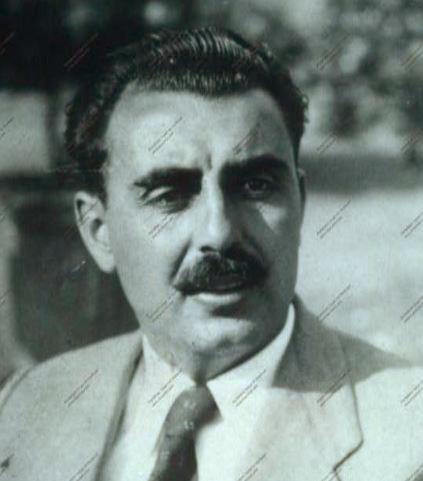
Andreas Ploumistos (1897-1962) was a founding member of the Hellenic Architectural Society. He studied at the Technical University of Munich and worked for a while in Germany until 1923 when he settled in Greece. For many years he was head of the architectural sector in the Municipality of Athens, a position from which he was responsible for the additions and the current image of the city hall of the capital. With the then young Aris Konstantinidis as his assistant, in 1939 they designed the imposing propylaea of the First Cemetery of Athens. He also designed many public and private buildings.
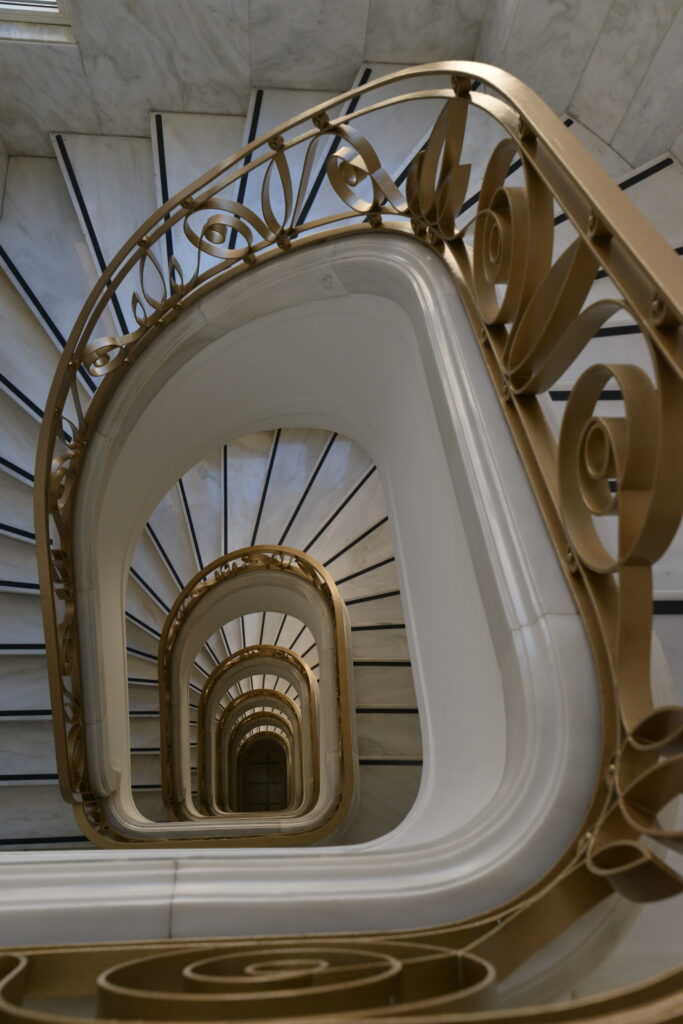
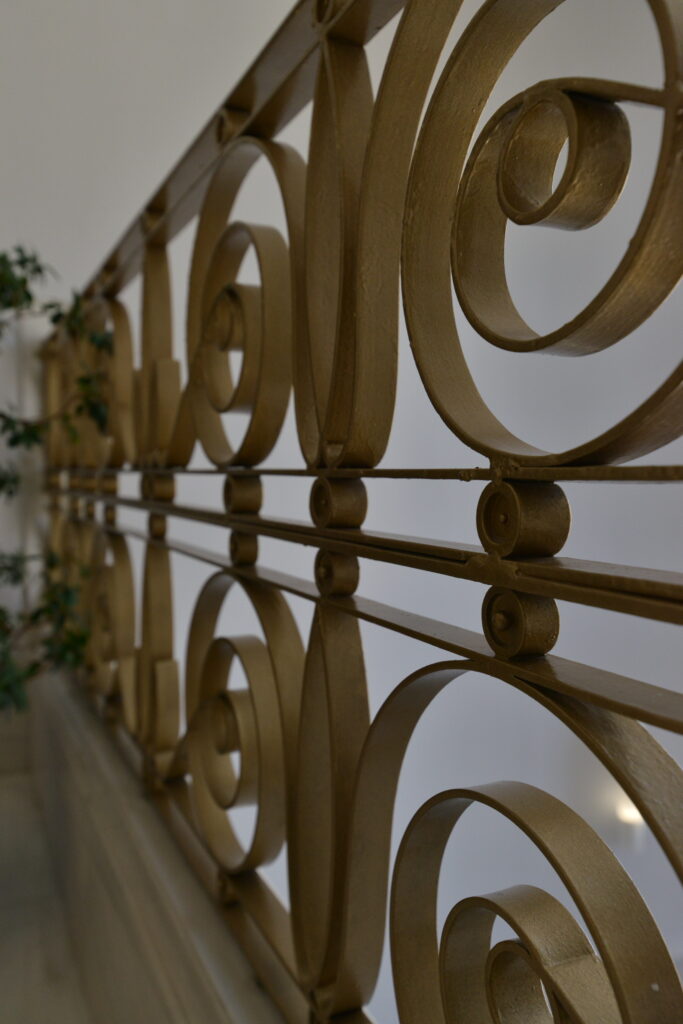
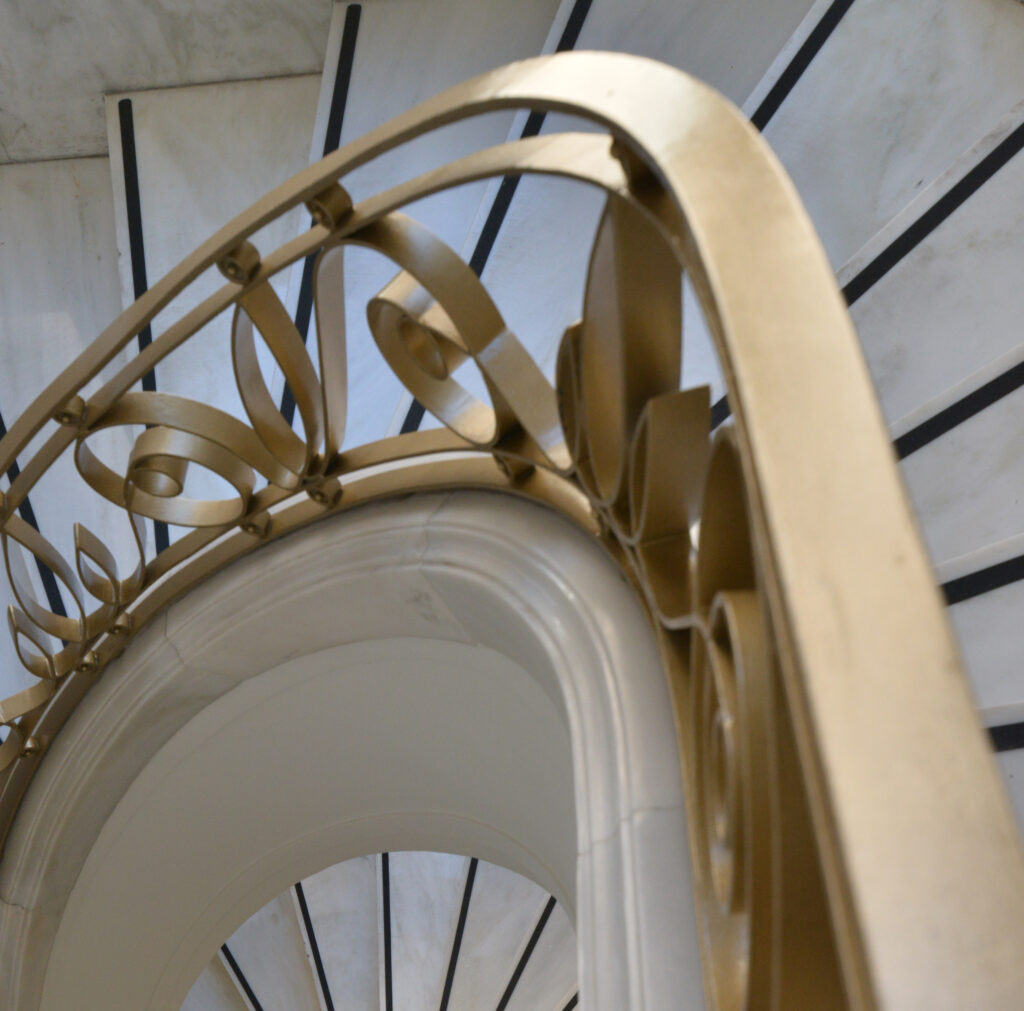
The iron decorative elements of the interior of the building were designed by Ploumistos and implemented by the workshop of Andreas Rigou, examples of which are presented below.
Andreas Rigos forge
The forge of Andreas Rigos from Pyrgos of Tinos has already established itself as the best in all of Greece, with full mechanical equipment, a separate design room and the best craftsmen trained there from an early age. Andreas Rigos, the grandson of Yiannis and son of Iakovos, in an continuation of a four-generation tradition in iron develops into a genius artist of the great age. He organized a workshop in 1932 where everything was designed on a one-to-one scale. He collaborated with the best-known architects of his time such as Andreas Plumistos and Anastasios Orlandos who sometimes gave them the ideas but rarely the plans, or usually, assigned everything to him. His works covers the whole of Greece including secular, ecclesiastical, small and large, monumental works, works that in order to be constructed required inventing new methods, innovative solutions and patents. Works that even today could not be done again.
The imposing internal staircase
The internal central staircase with the Handrail of Andea Rigos
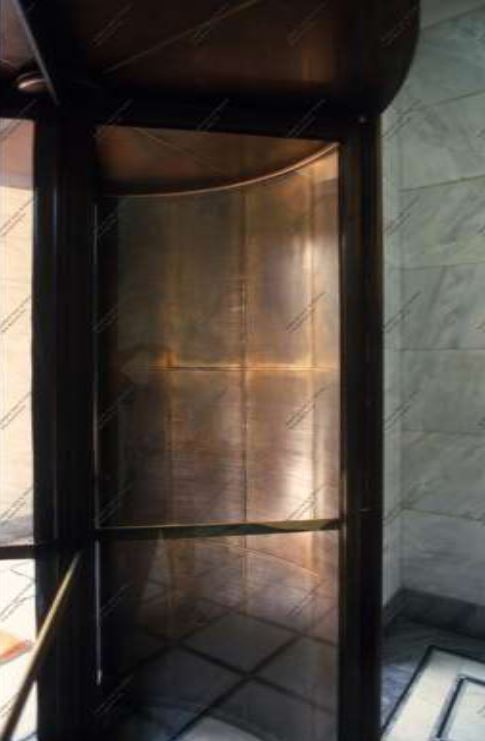
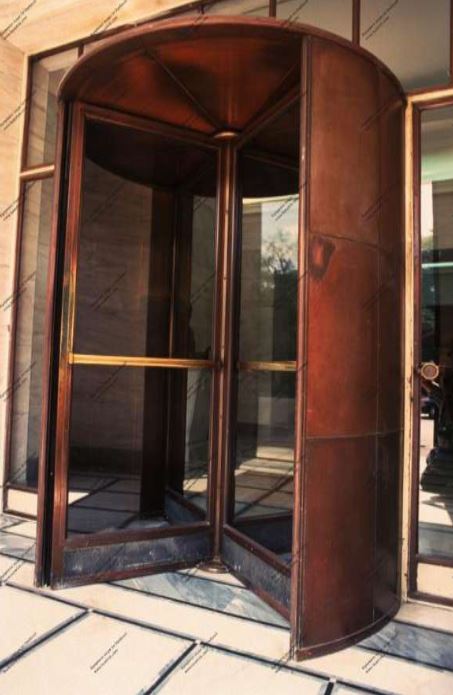
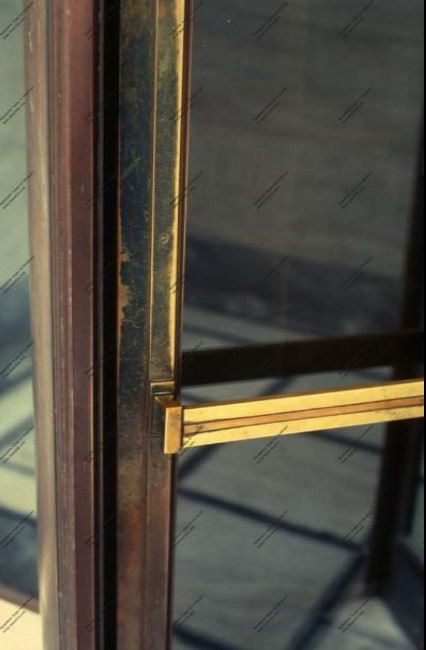
The innovative revolving door of the central entrance which has now been replaced by other doors.
   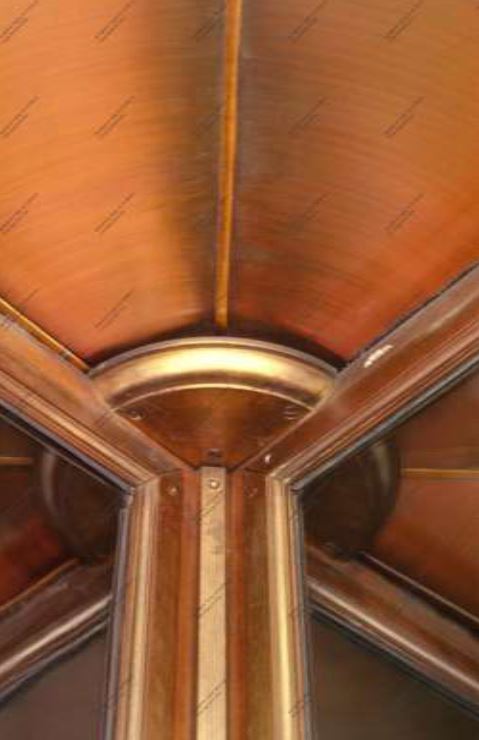 |
History of Prodromos Athanasiadis/ Bodosakis
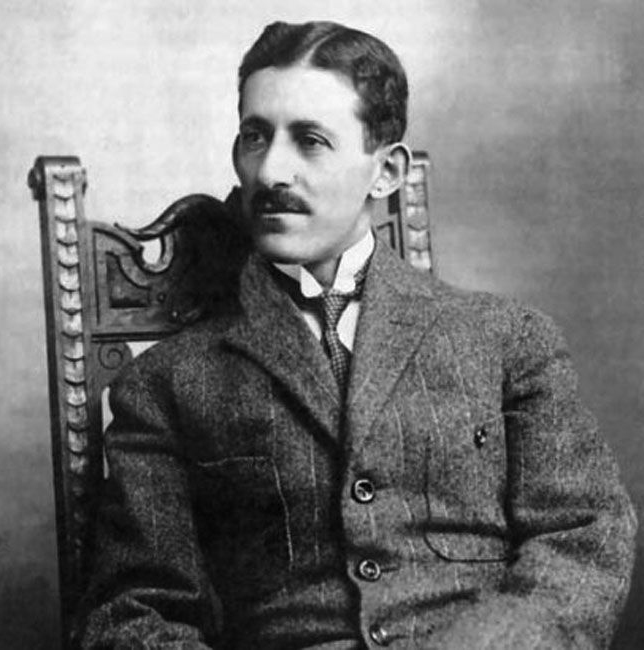
Prodromos Athanasiadis (1890-1979) is none other than Bodosakis, a surname derived from a corruption of his baptismal name in the Turkish language. He was born in a small town, Poros, in the province of Nigdis, Turkey, and was part of a poor family of five children. He was forced to emigrate at a very young age and grew up wearing “trodden” (used or worn previously by someone else) shoes, as stated in his biography published by the Bodosakis Foundation, edited by Kostas Hatziotis.
Poverty led him to find innovative solutions and at the young age of 17 he was an important economic factor in Mersina and then in Istanbul. He settled in Greece in 1922, after the Asia Minor Disaster, where he started his new businesses. Chemical industry, mines, mining, glassworks and munition creation were some of his profitable businesses, which just before the war represented 35% of the country’s industrial production. A political friend of Eleftherios Venizelos, he did not have good relations with the dictatorship governments. It is reported that during his meeting with Ioannis Metaxas he said to him: “I am not asking for good, I do not want you to do me harm”.
In 1948, shortly before the end of the Civil War, the largest businessman of the time bought the undeveloped plot of land at the corner of the avenue with the small Souri street that connects
Bibliography
The research is based on data found among others in the books of Florakis A., 2013, “The “gyftika” of Oxo Meria Tinos forges and smithies in the 19th and 20th centuries”, Athens: Fraternity of Tinians in Athens, Karali M., 2002, ” The rural dwellings in Exomeria of Tinos”, Athens: Cultural technological foundation of тне Hellenic bank of industrial development, Moschatos A., 2000, About the Island of Tinos (1855), Athens: Society of Tinian Studies, Collective volume, 1979, Ethnography, Athens: Peloponnesian Folklore Foundation, Florakis A., 2018, “Old quarries and marble splitters of Tinos” Athens: Piraeus Bank Group Cultural Foundation (PIOP), Collective volume, 2009 “Tetradia Exomerias” Athens: edited by Kostas Danousis, Collective volume, 2009 “Memoirs of Panormos” Athens: edited by Kostas Danousis, Collective volume, 2024 “Navigare necesse est honor to Kostas Danousis”, Athens: Fraternity of Tinians in Athens, in exhortations and directions of Dr Florakis and Mr Danousis, in other essays such as those of Iakovos Rigos but also in interviews conducted by the NWMW team in the context of the Fe26 project – “Sculpting memory”.
More info on the traces project here