

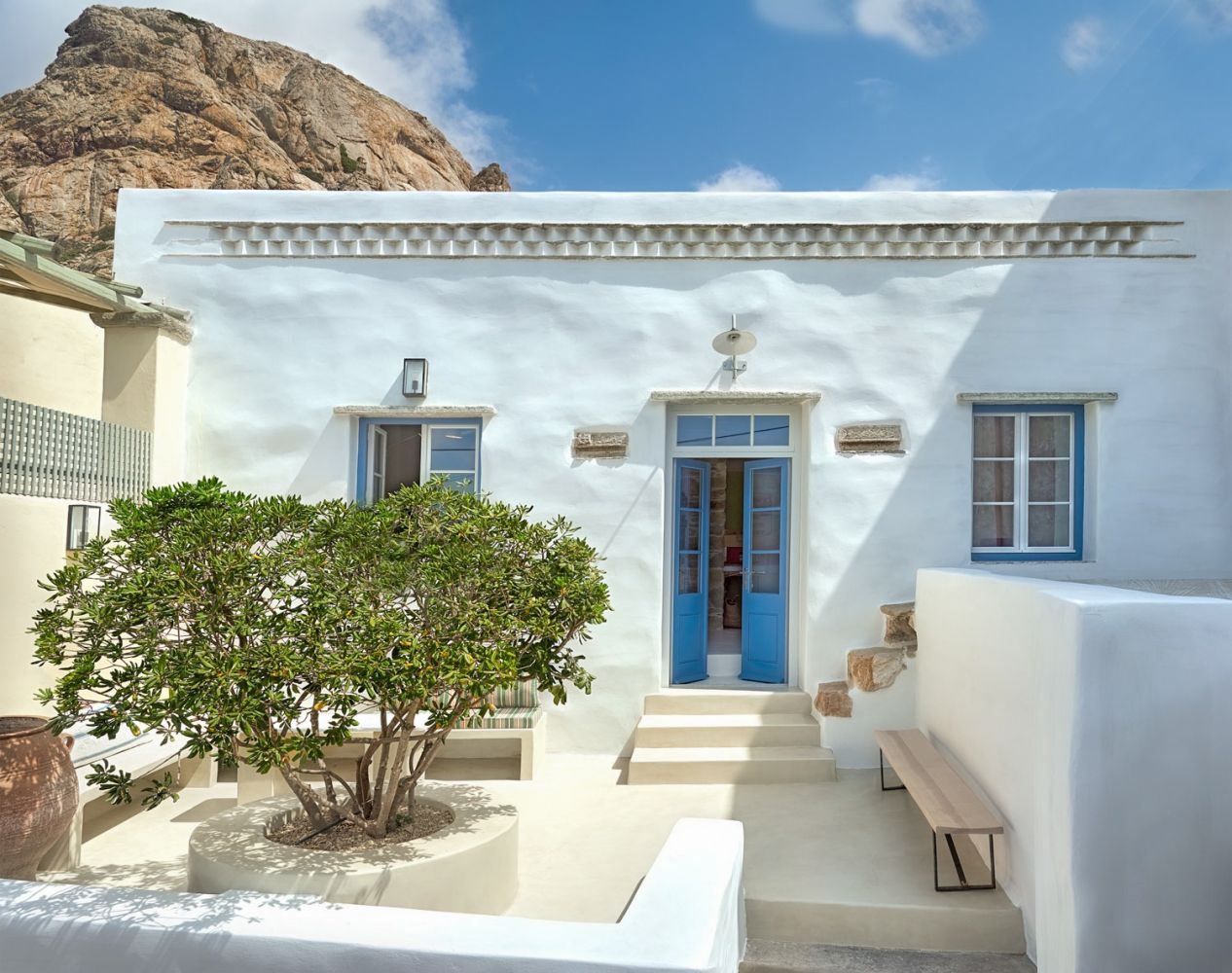
The exterior of the smithy as it is today © Xinara House
Address Xinara, Tinos
Space type House / Smithy
Area Mesa Meri
Time period 1883 – 1890, 19th century
The second blacksmith shop of the Rigos family, originally from Ysternia, was opened in Xinara, as a branch by the progenitor of the family, Yiannis Rigos, and was given to his son Thanasis to manage. When Thanasis went to the army, Markos, who was younger, attended to the shop. The building and plot of land that the family bought, previously belonged to the despot and were secured for the family by clients from the area. The variety of objects and tools made by this specific workshop was quite large but mostly related to agriculture it also included a farrier shop.
History of the smithy
There were many farmers from Mesa Meri (the inner part of the island) and they used to travel to the blacksmiths in Ysternia for their tools. The distance between Ysternia and the Mesa Meri villages like Komi & Kalloni is about 20 kilometers. They would leave at night and return at night even in the winter. Customers waited day and night outside the smithy in Ysternia with their wine, their food and their donkeys until Barba Yannis decided to send his eldest son Thanasis to open a smithy in Xinara.
/ mesa meri – in Tinos are the villages in the inner part of the island and the people living there were mostly farmers
“What’s the deal, barba Yannis, they were telling him, you can’t keep up with us. You also have a son, Thanasis, who is older, but you don’t send him Mesa” (meaning Mesa Meri).
/barba – is a word meaning an older person or master craftsman in Greek. It is used before the name of the person characterised as barba.
Back then mesa meri was predominantly catholic and exo meri was predominately orthodox. “He wondered who would find an Orthodox like him a shop among Catholics. But his clients talked to the bishop, and they found a house in Xinara. He bought it and sent his eldest son Thanasis there and he controlled the clients needs a little. The people from Mesa Meri needed all kinds of agricultural tools – harrows, pickaxes, hoes, scythes but most of all? for ferrets and pickaxes for winter.”
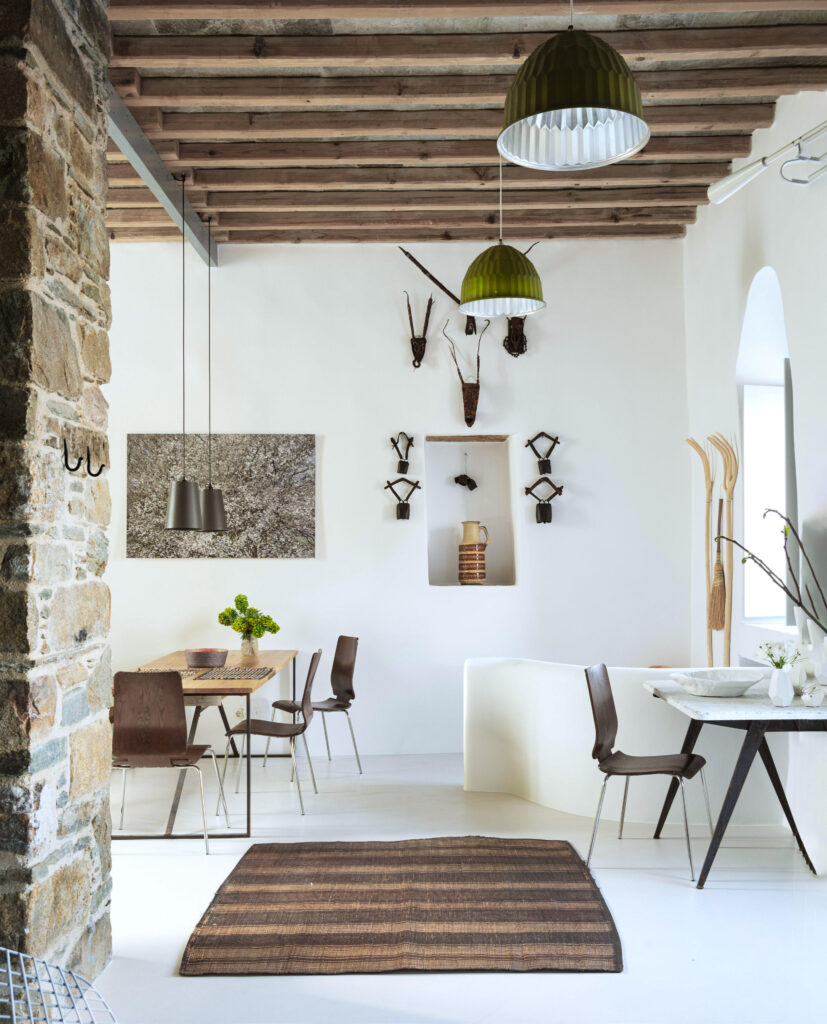
The photo shows the interior of building today, and some of the tools and objects the smithy has created. © Xinara House
Branch
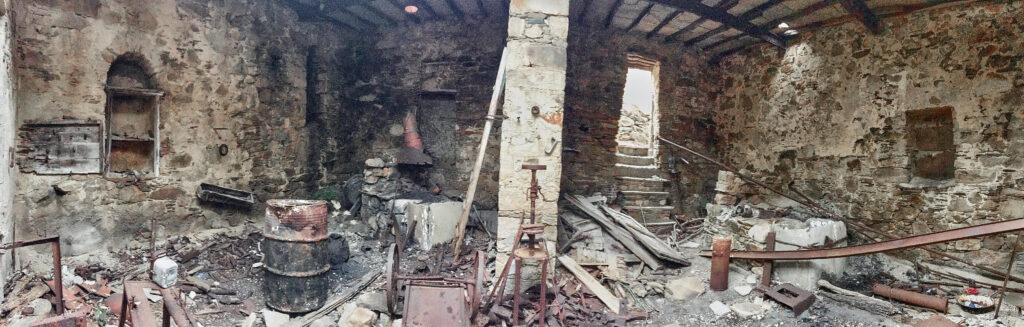
The photo shows the interior of the smithy, before the renovation work took place. © Xinara House
As stated above the smithy in Xynara was created as a branch by the progenitor of the family and was controlled by him through Thanassis and after Markos took over the management. Later on the smithy was jointly run by four sons of Markos since six of his twelve children became blacksmiths. Later they went down to Chora (the port city of the island) where they opened a workshop.
Tools / Object
The variety of objects and tools made by this particular smithy was rather large particularly if you take in consideration it included a farrier shop. Among others, the workshop produced the following objects that are depicted in the photo below like rakes, pruners, cleavers, sushtes, dikriani, kasmas, part of fencing, railing etc.
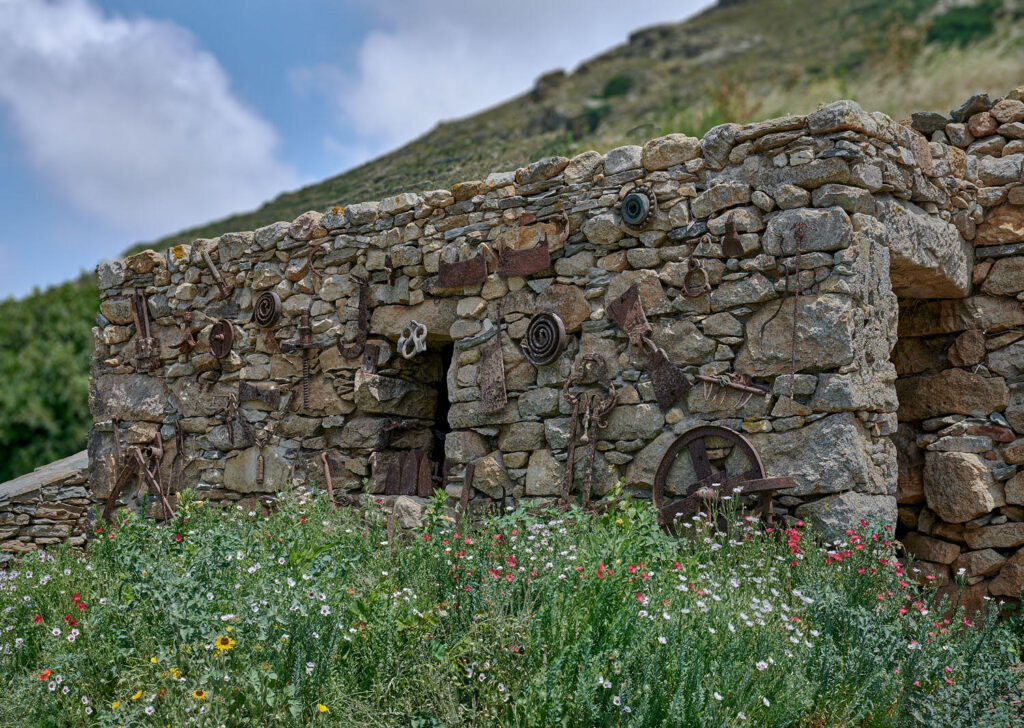
The photo shows some of the objects and tools made by the Riga blacksmith shop in Xinara. © Xinara House
Clientele
Mr. Yiannis Delatolas remembers about the clientele of the smithy:
They were local villagers who needed agricultural tools such as ploughs, pickaxes, rakes, horseshoes and useful household items.
Xinara
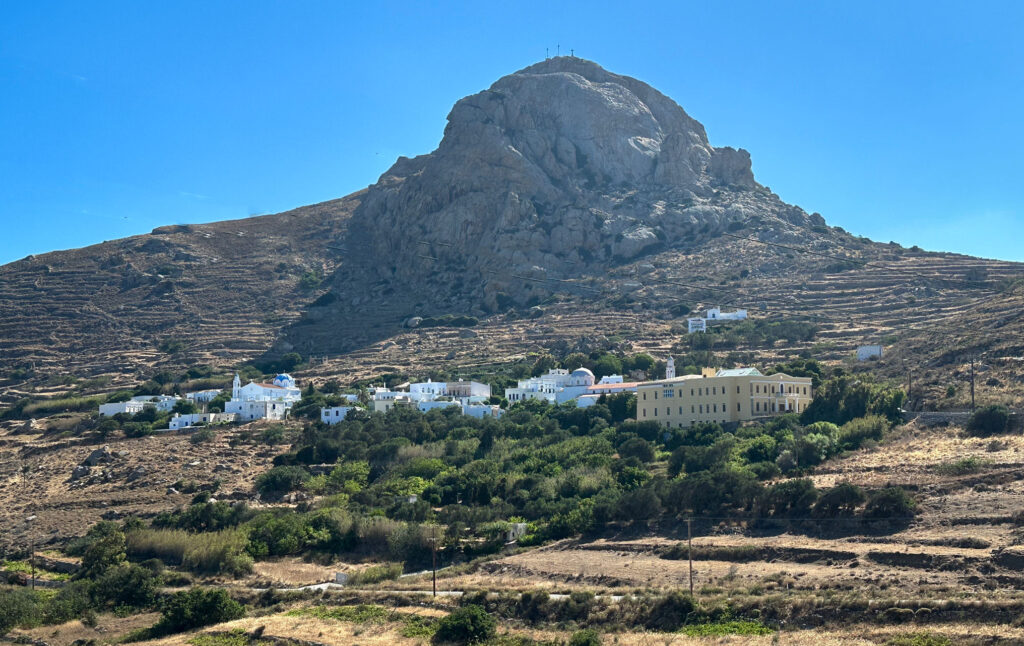
The photo shows the Xinara village today, a view from the road. © Alexandra Gryparis
Xinara village is built at the foot of Xomburgo mountain. During medieval times, it was the cultural and commercial center of the island, gathering most of the pre-industrial activities. When the Venetians left, the seat and administration moved there. To be precise, in 1855, Xinara had 250 inhabitants and was the seat of the Latin bishop. It was a village with an intense life, four cafes, a shop, a bakery, a smithy that also had a horseshoe shop, a shoemaker’s shop, and two mills.
Bibliography
The research is based on data found among others in the books of Florakis A., 2013, “The “gyftika” of Oxo Meria Tinos forges and smithies in the 19th and 20th centuries”, Athens: Fraternity of Tinians in Athens, Karali M., 2002, ” The rural dwellings in Exomeria of Tinos”, Athens: Cultural technological foundation of тне Hellenic bank of industrial development, Moschatos A., 2000, About the Island of Tinos (1855), Athens: Society of Tinian Studies, Collective volume, 1979, Ethnography, Athens: Peloponnesian Folklore Foundation, Florakis A., 2018, “Old quarries and marble splitters of Tinos” Athens: Piraeus Bank Group Cultural Foundation (PIOP), Collective volume, 2009 “Tetradia Exomerias” Athens: edited by Kostas Danousis, Collective volume, 2009 “Memoirs of Panormos” Athens: edited by Kostas Danousis, Collective volume, 2024 “Navigare necesse est honor to Kostas Danousis”, Athens: Fraternity of Tinians in Athens, in exhortations and directions of Dr Florakis and Mr Danousis, in other essays such as those of Iakovos Rigos but also in interviews conducted by the NWMW team in the context of the Fe26 project – “Sculpting memory”.
More info on the traces project here