

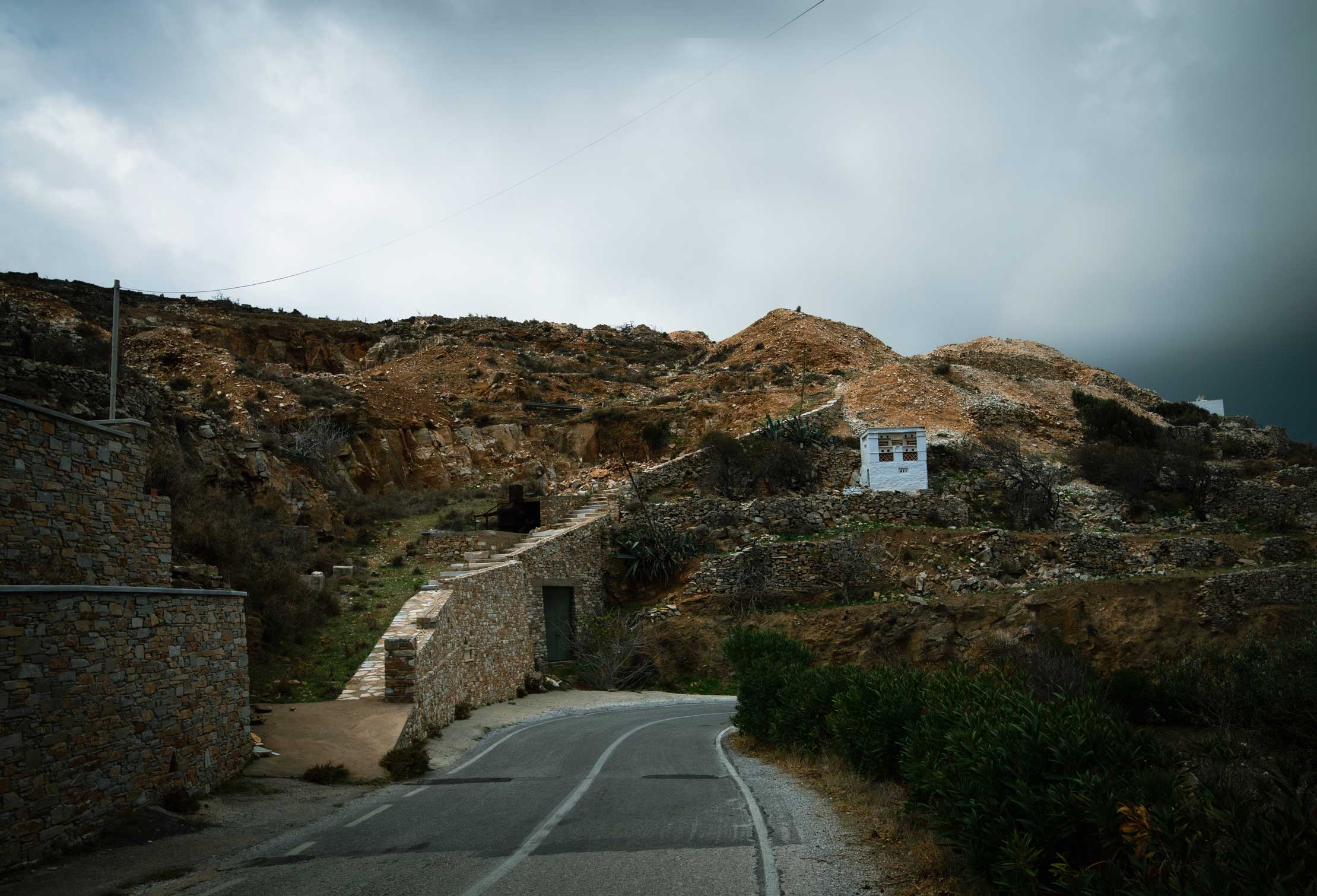
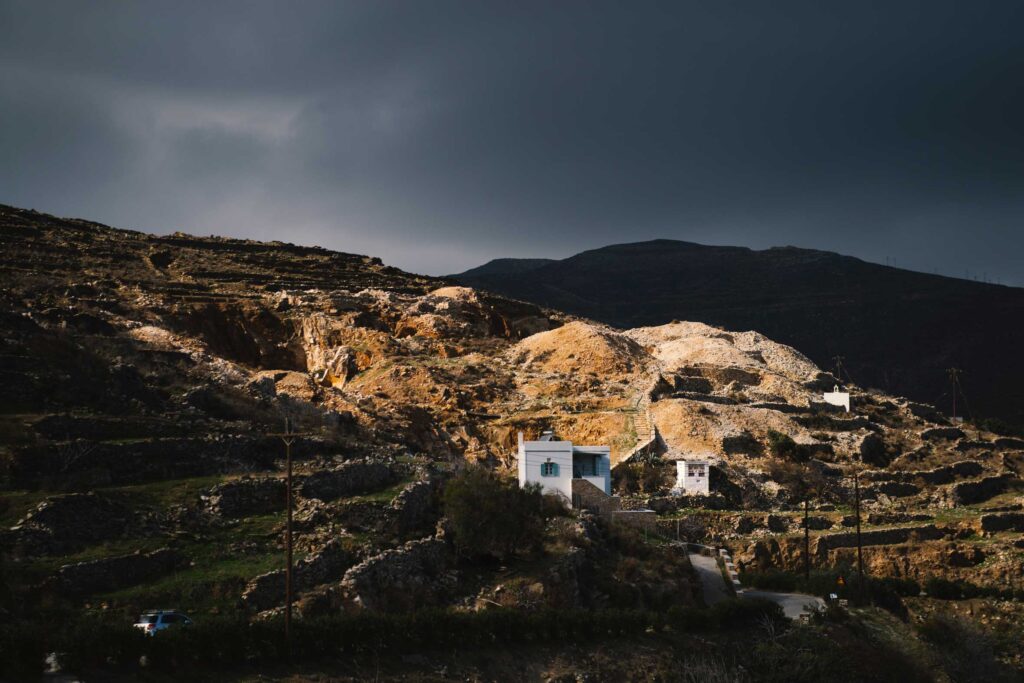
It is one of the early quarries of the village of Pyrgos in Exo Meria of Tinos and is located directly above the village. Although the place is called Marmara, the damari is known as “Damari of Ai-Leuteriou” from the chapel of Agios Eleftherios, which is built on its curbs. According to tradition, “at this site, where thousands of cubic meters of white marble have been extracted in very old times, the marble workers of that time built it to have a patron saint”. It includes three separate pelicans (previously more), that is, three independent properties which changed owners over time. The marble layer of this quarry is white marble. The marble it includes is solid, white with reddish veins. Its good quality, the ease of extraction provided by the combs and the ease of transportation (due to the immediate proximity to the village) contributed to its exploitation, at least from the 17th century, as attested by dated constructions made of this marble.
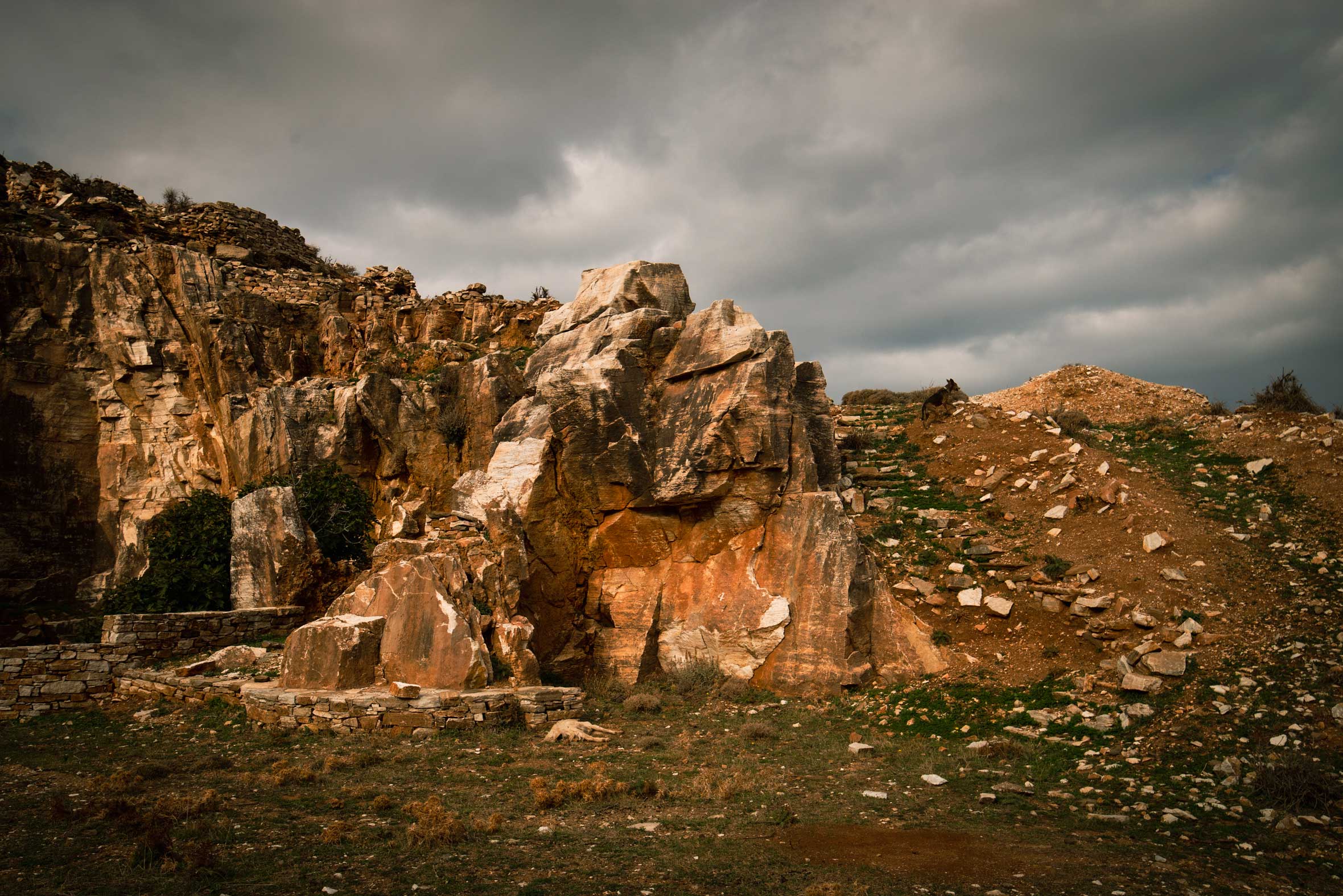
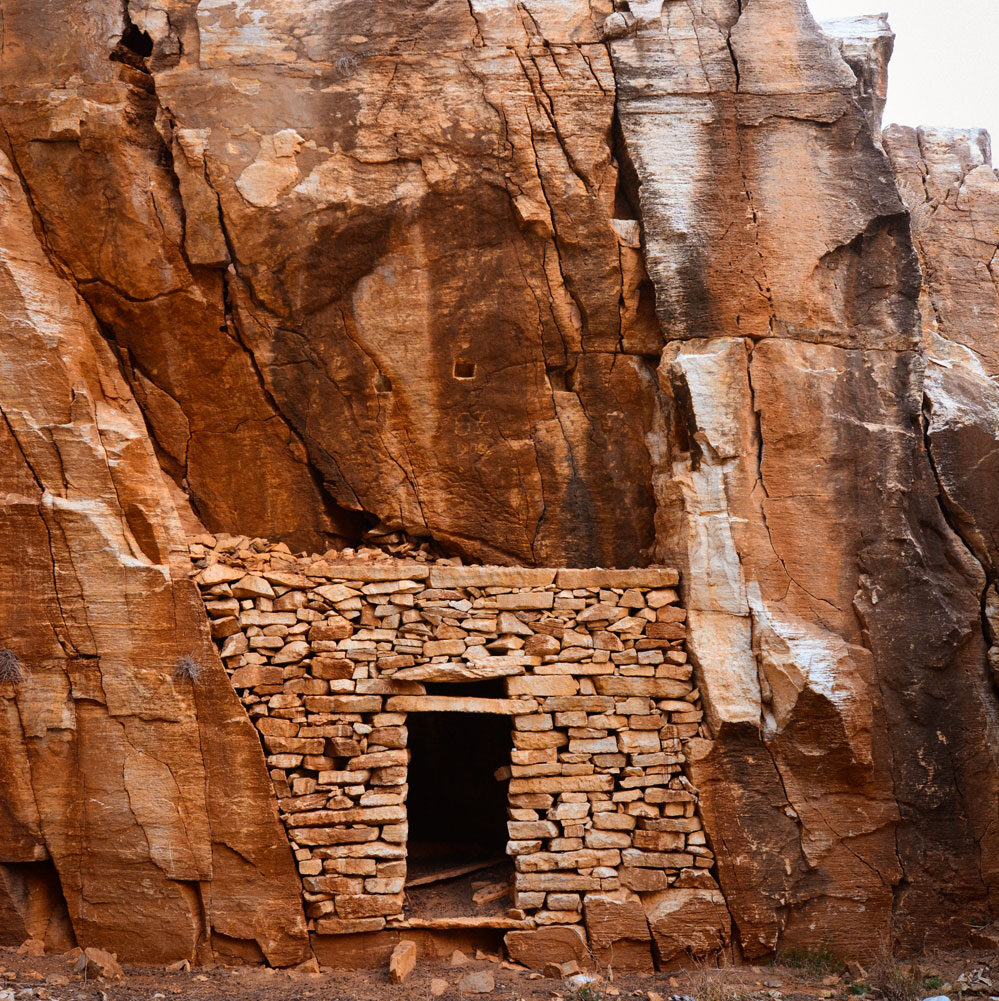
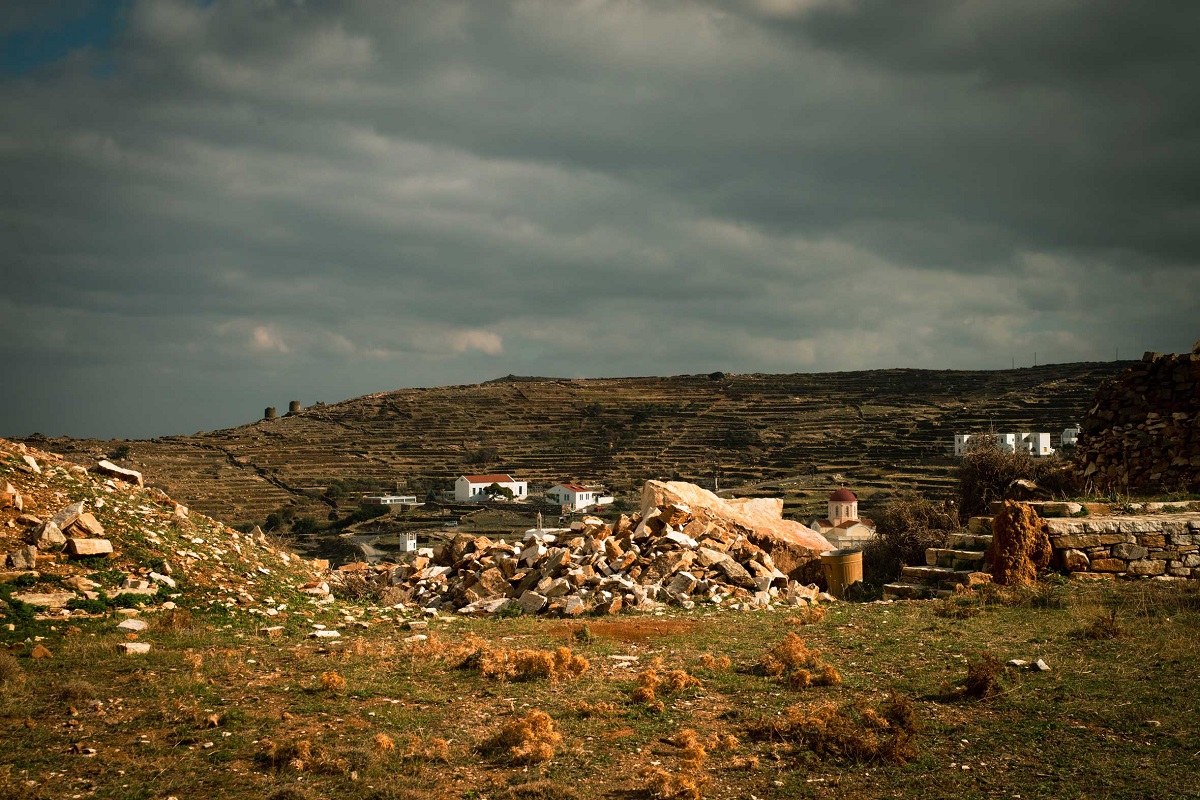
The photos depict views of the Agios Eleftherios quarry.© Alexandra Gryparis
Tools – Mining
The mining method has remained more or less the same since ancient times and was based on the knowledge of the quarries about the material and the needs they wanted to meet. It relied mainly on three tools in the pike, the heavy and the wedges. These tools were made of solid iron and suffered a lot from use due to the nature of the marble. From the blacksmiths who made and took care of these tools, the skill of the quarries and then the marble workers who would use the marbles began. The way the tools were made determined their relationship with the marble. In order to be able to carve the marble and build works like the Parthenon, the Ancient Greeks had to have perfect tools for mining and processing the marble, i.e. both excellent processing of the metal (shaping) and excellent painting (hardening).
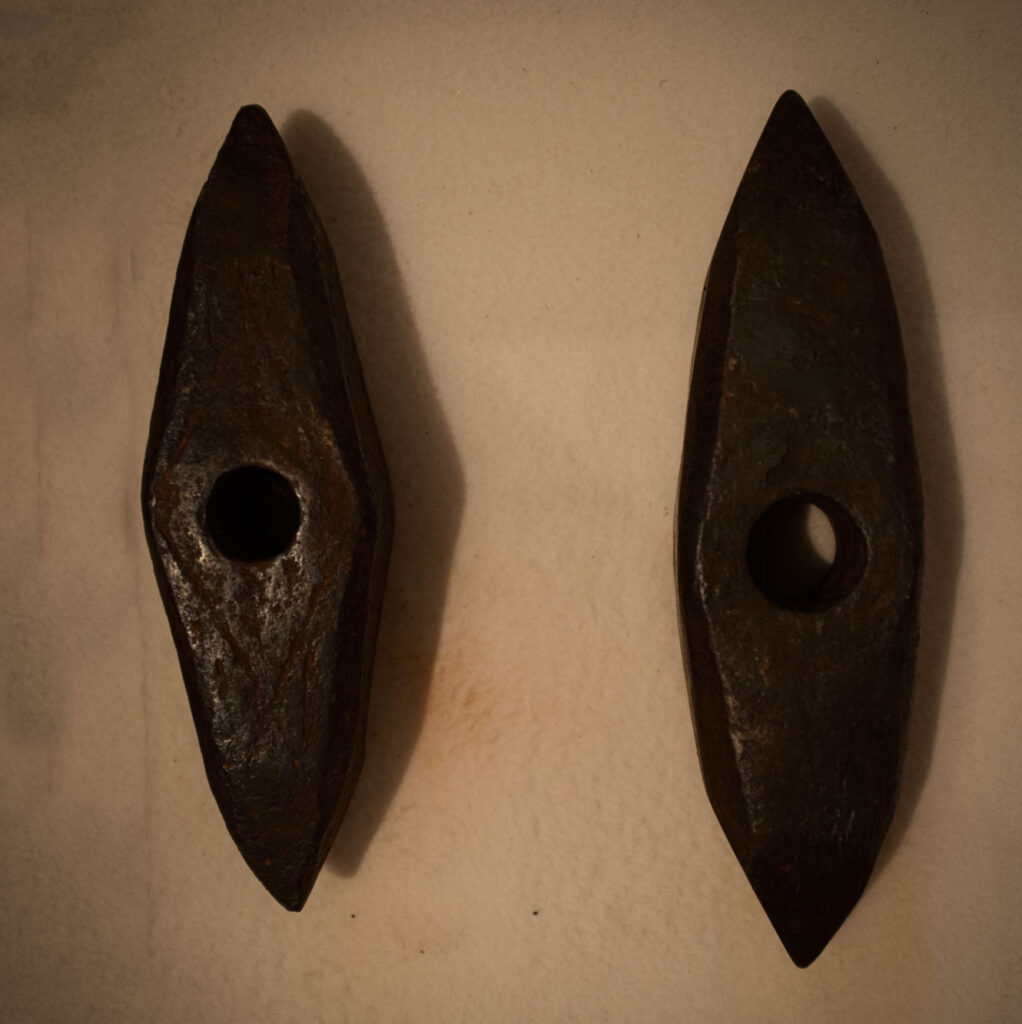
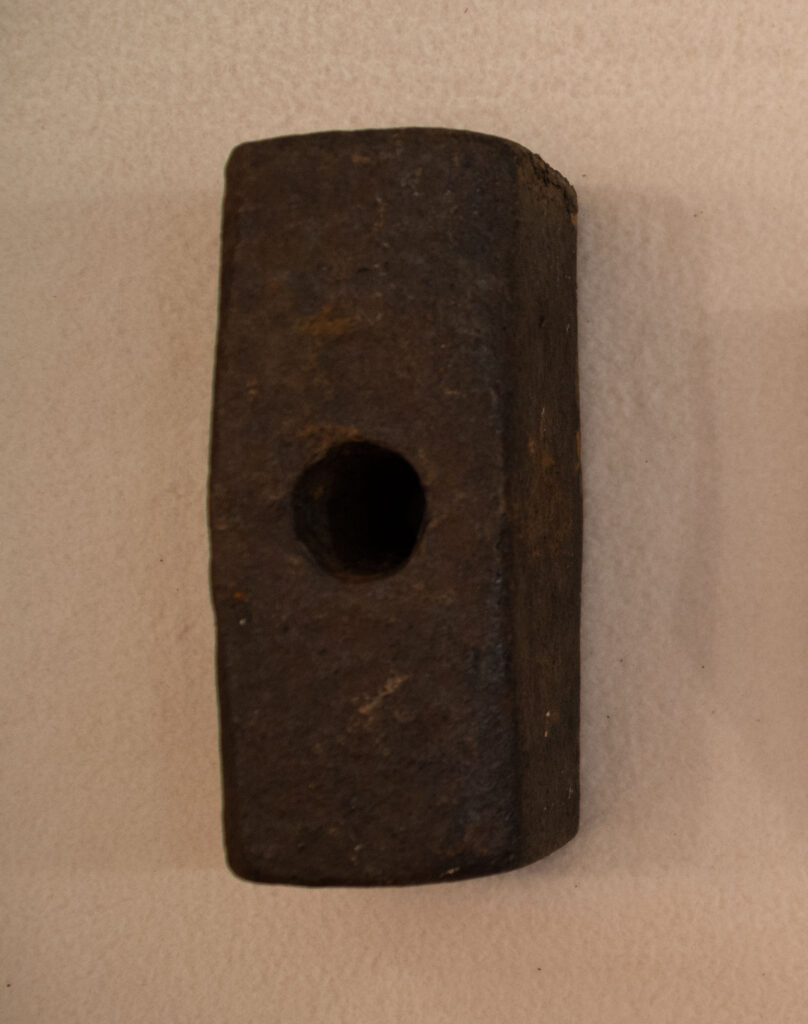
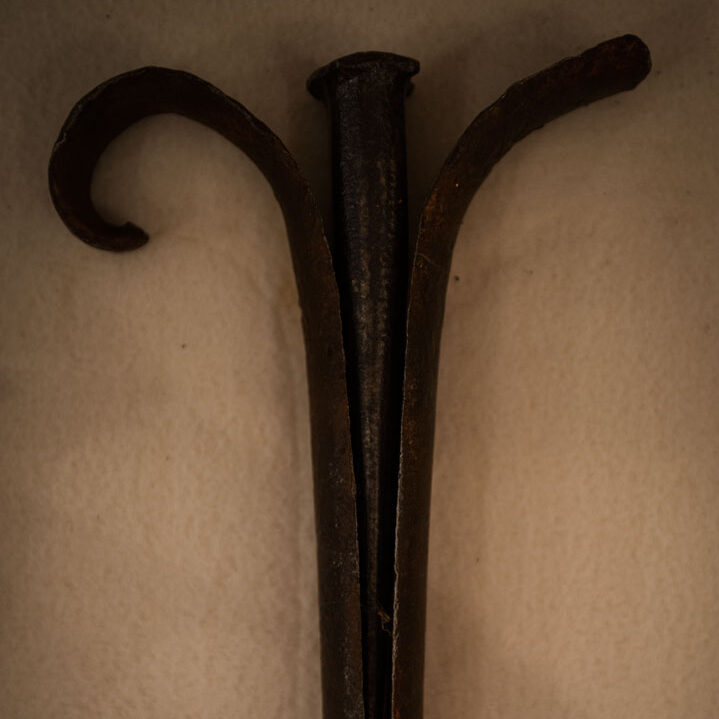
The tools pictured are from the Marla Tool Museum and show two pickaxes, heavy and wedge.© Alexandra Gryparis
The well-known Dr. Manolis Korres says about the tools:
One of the secrets of the construction was the metallurgy of the stone tools and the incredible skill of the ancient stonemasons. From the quality of the marks they left on the marbles, it appears that their tools were far superior to those of today. It is evident that at that time they had arrived at some unsurpassed metallurgical recipes, after very rigorous experimental research. These recipes were lost, like much other special knowledge, when the ancient world began to decline
The quarry
The marble layer of this quarry, which is white marble, is the starting point of a fold (wreath) that disappears under the ground and reappears. Along its route, it was also used in other places such as Vathy of Faneromeni. The marble it includes is solid, white with reddish veins. It is of a good quality, the ease of extraction provided by the combs and the ease of transportation (due to the immediate proximity to the village) contributed to its exploitation, at least from the 17th century, as attested by dated constructions made of this marble.
White Marble
Tinos is one of the islands of the Aegean where white marble abounds, although it is not of excellent quality, it cannot be compared to, say, Penteliko or that of Paros. Along with the white marble, in Tinos there are also many other types of marble such as the green marble with white lines, the Vert antique of the French, which is the only green marble that can be found in Greece. The white marble from Tinos was mainly used for the construction of architectural structures, tombstones and for layers of church floors and sidewalks. It seems possible that marbles of some early works come from this quarry, such as those found in the iconostasis of Agios Nikolaos of Vanis, 1662-64. The staircase of the church of Ag. Nikolaou in Pyrgos has been created with marbles from this quarry.
Quarries of Tinos
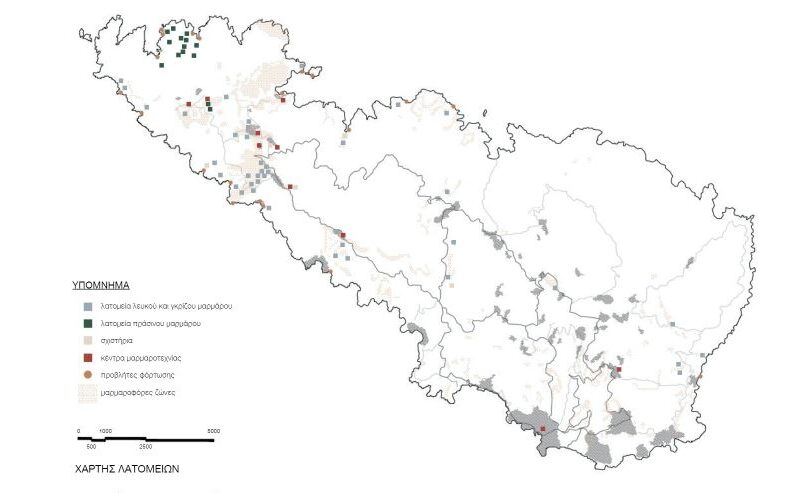
Most of the island’s marble quarries are located in Exo Meria in the areas of the villages of Kardiani, Ysternia, Pyrgos and Marlas. Thus, in Exo Meria, white marble quarries can be found at Mourounia near Pyrgos, at Kakia Skala Panormou, at Vathy in Faneromeni, at Mount Patela in Isternia, at Vathy in Karabousa. On the rest of the island, white marble is found in Falatado, Aetofolia and Lychnaftia. The mining of white and green marble seems to have started in ancient times, especially in Khousla (green) and Vathi of Faneromeni (white). In ancient times, the white marble of Tinos was not used for architectural constructions of temples like in Kionia because it is considered of inferior quality, instead Penteliko or Parian marble was used. At the beginning of the 14th century AD a Venetian source allows us to assume that green marble was mined and exported since the Venetians were interested in colored marbles. Some architectural members of the church of Ag. Markou in Venice is made from green Tinos marble.
Exo Meria
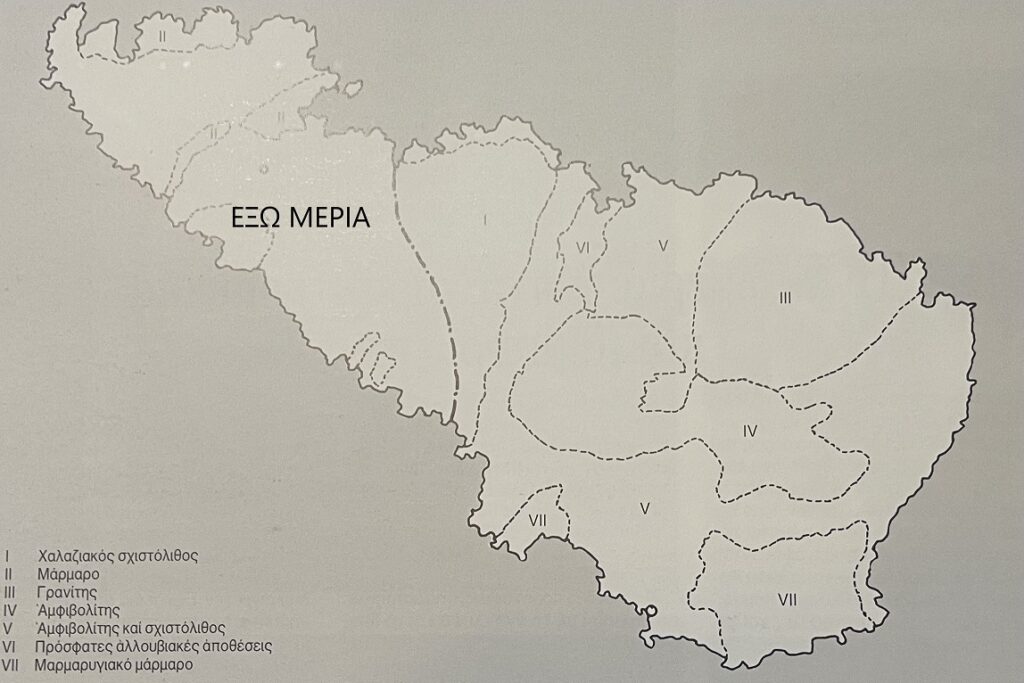
Exo Meria covers a little less than a third of the surface of the island. It extends in its northwestern part and includes the most barren lands. Given the great distance of Exo Meria from the capital of the island during the times of the Turkish occupation it received relief and privileges. The Tinian explorers who roamed the coasts of Asia Minor are known. The mountainous terrain that separated the outer part from the rest of the island contributes to the creation of conditions of autonomy. If we observe the geological map, we will find that the slate material from which exclusively rural houses are built, saw the only component of the soil of Exo Meria. It is noteworthy that the boundaries of Exo Meria almost coincide with corresponding boundaries in the constitution of the territories of Tinos. Another element that characterizes and distinguishes the outer area is the origin of many great artists, especially sculptors. This is directly linked both to a long tradition of the profession of stonemason and marble sculptor as well as the existence of abundant marble which constitutes the raw material.
Bibliography
The research is based on data found among others in the books of Florakis A., 2013, “The “gyftika” of Oxo Meria Tinos forges and smithies in the 19th and 20th centuries”, Athens: Fraternity of Tinians in Athens, Karali M., 2002, ” The rural dwellings in Exomeria of Tinos”, Athens: Cultural technological foundation of тне Hellenic bank of industrial development, Collective volume, 1979, Ethnography, Athens: Peloponnesian Folklore Foundation, Florakis A., 2018, “Old quarries and marble splitters of Tinos” Athens: Piraeus Bank Group Cultural Foundation (PIOP), Collective volume, 2009 “Tetradia Exomerias” Athens: edited by Kostas Danousis, Collective volume, 2009 “Memoirs of Panormos” Athens: edited by Kostas Danousis, Collective volume, 2024 “Navigare necesse est honor to Kostas Danousis”, Athens: Fraternity of Tinians in Athens, in exhortations and directions of Dr Florakis and Mr Danousis, in other essays such as those of Iakovos Rigos but also in interviews conducted by the NWMW team in the context of the Fe26 project – “Sculpting memory”.
More info on the traces project here