

Location Pyrgos, Tinos
Space Type Home / Marble craft shop
Area Exo Meria
Time-Period1970-1980, 20th century
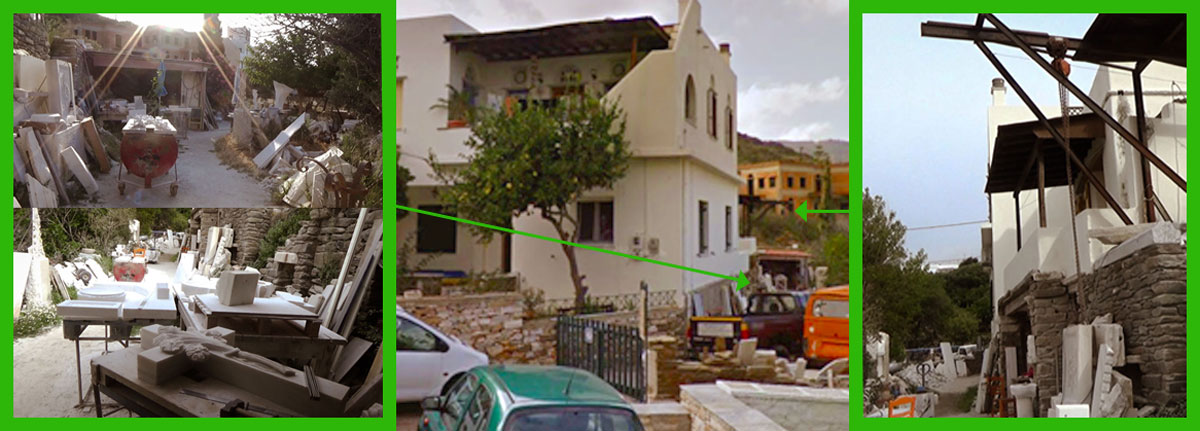
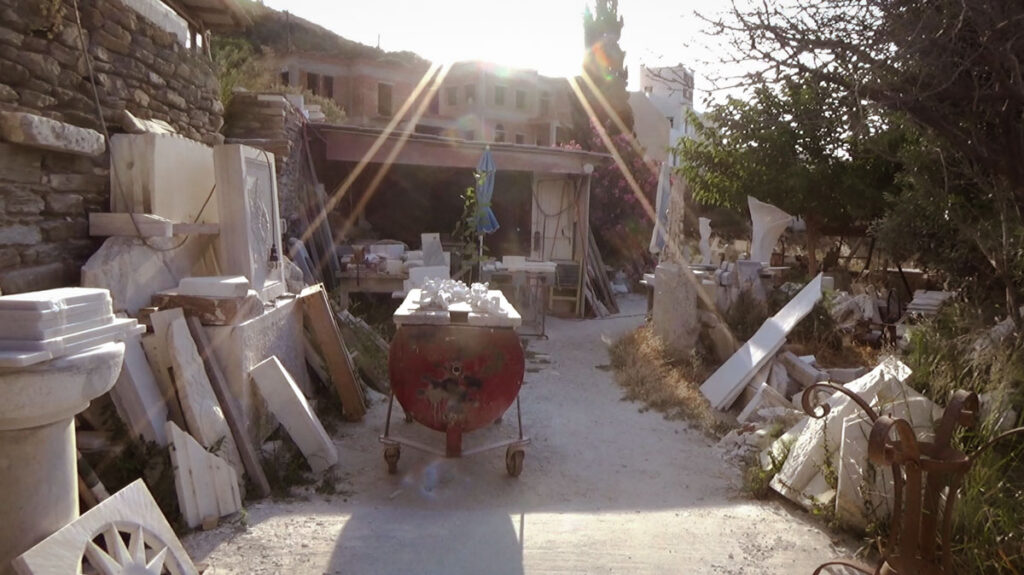
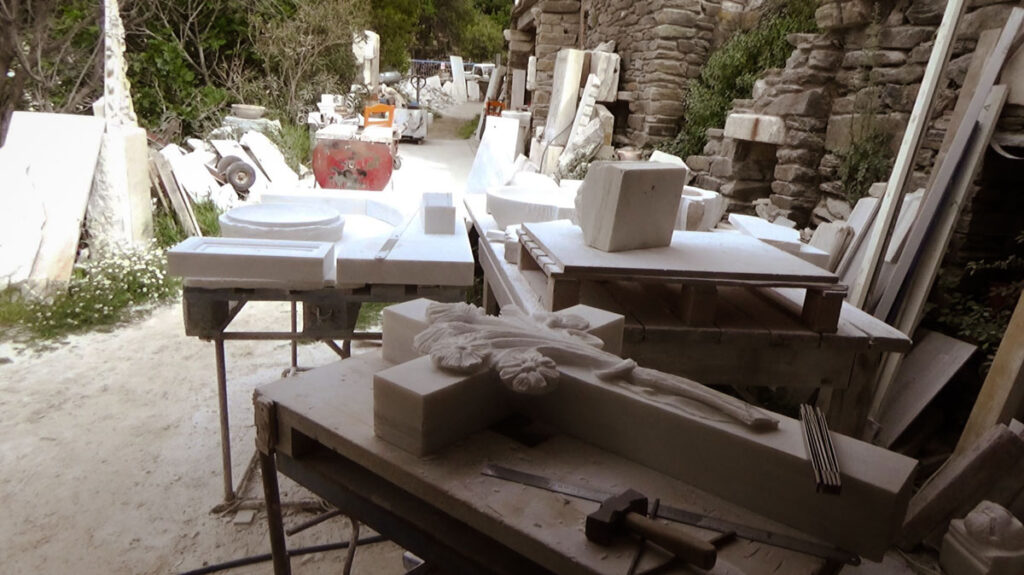
The marble craft workshop of Lambros Diamantopoulos is located in Pyrgos of Tinos and was built as usual with the workshops of marble workers next to his house based on his own needs. It was divided into three parts. An outdoor area for storing, processing and cutting marbles of all sizes etc., a semi-outdoor area to do the bulk of the processing and an indoor area to be able to work in the winter and keep his plans and tools. The marble tools are made to order from the blacksmith and in collaboration with him. Diamantopoulos tools were made by Costas Alexopoulos.
Tools
Marble is formed by successively removing parts of matter from an initial volume. Of the tools, most are identified with their ancient Greek counterparts. As parts of a technical system, they are divided into tools of the quarry (mining and first processing) and tools of the workshop (shaping, decoration and placement of the final product). Some, such as the characteristic hammer of the marbles, the ma(n)trakas, and a series of chisels are used in both areas, in varying sizes larger in the quarry, smaller in the laboratory.
Mantrakas
The mallet or mandrakas is a type of hammer and is the main tool of marble workers. Etymologically the word matrakash < (direct loan) Turkish matrak (bat) < Arabic مطرقة (matrakah, wooden hammer). The mandrakas of each marble craftsmen is the first tool he buys before starting to carve and it is strictly personal, made by the blacksmith for each individual, that is why it has his name or his initials as we see in the images below.
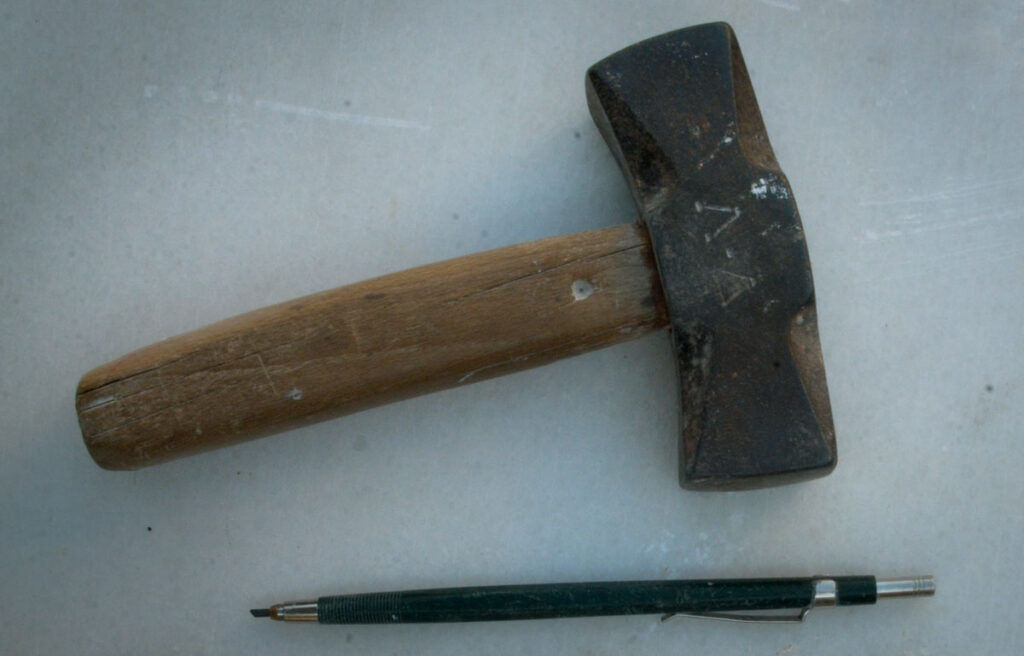
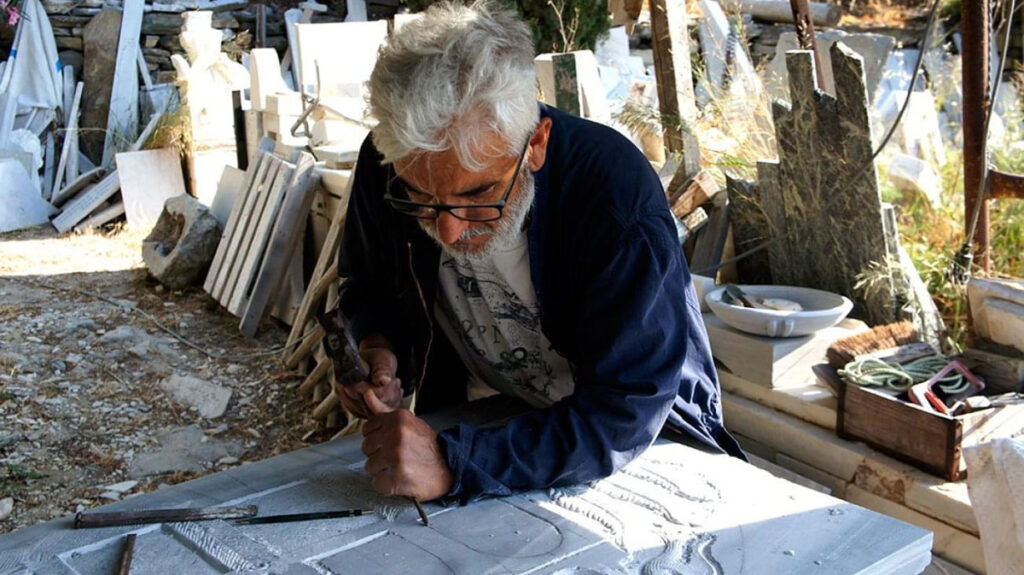
The mantrakas Labros Diamantopoulos was created by Kostas Alexopoulos
This mandrakas, no matter how much use it suffers, does not fade and accompanies the craftsman forever. Usually the marble makers make several mandrakes to have the convenience of changing the sizes or weights and then using them differently. The handmade process of its construction allows the blacksmith to modify it and bring it to the requirements of the marble. Blacksmiths and manufacture exactly what they need in both tools and mandrake, This partnership blacksmiths marbles
Other marble tools
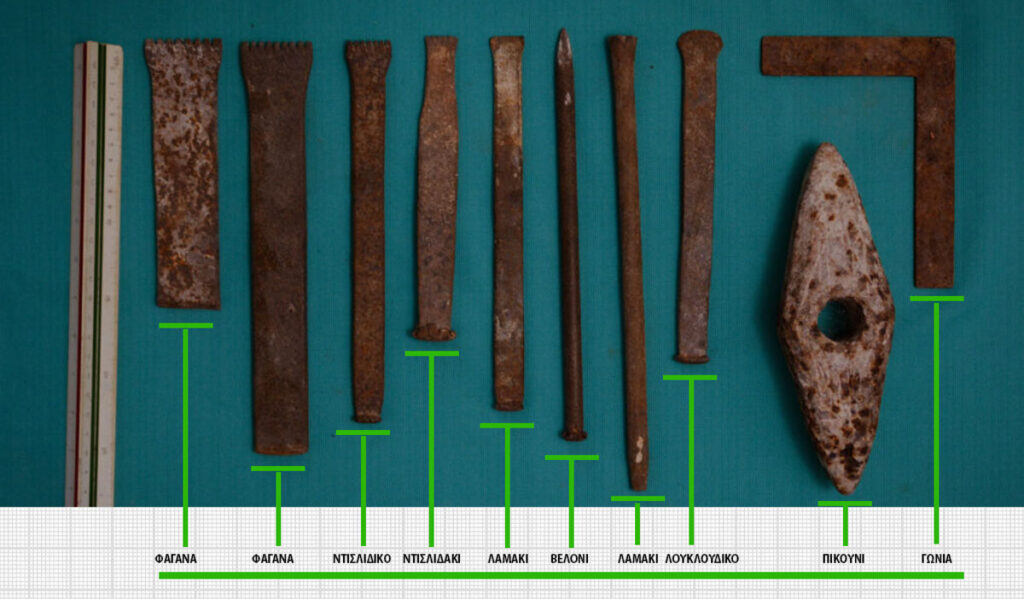
Lampros Diamantopoulos tools along with his mantrakas were all made by Kostas Alexopoulos
The workshop
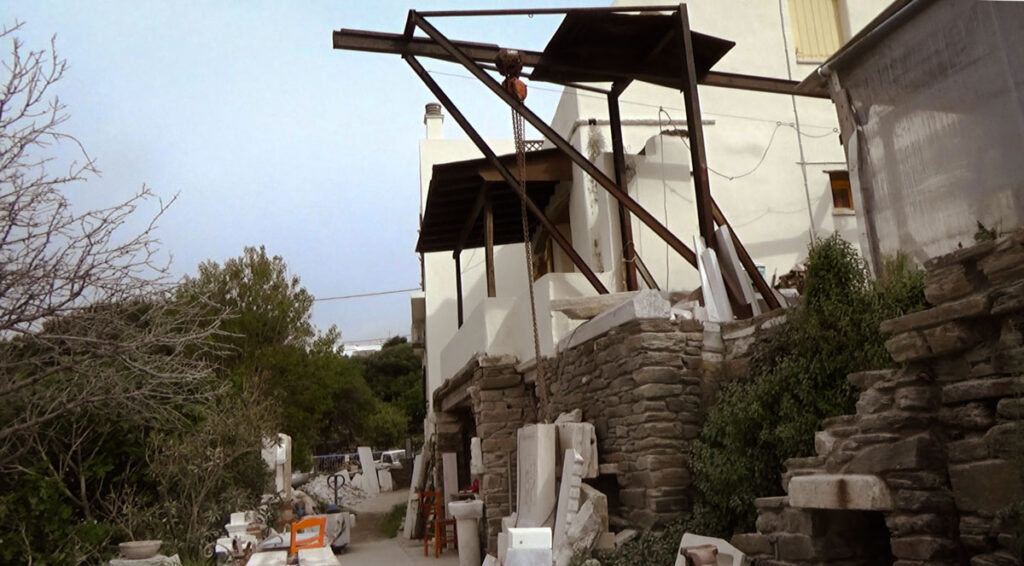
The workshop had a crane to transport large volumes of marble for the ease of the marble. At the front it has a large space with easy access to cars and trucks both for the easy import of volumes from the quarry and the transport of finished sculpted objects. The weights are so big that everything has to be very organized for it to run smoothly. The anthlibolas, or rice papers with the plans for projects, are also kept in the interior.
Labros Diamantopoulos
The marble sculptor / craftsman Lambros Diamantopoulos was born in Pyrgos of Tinos in 1955. He graduated from the Fine Arts School of Panormos Tinos in 1971, while in 1979 he founded his workshop in Pyrgos, making lintels, faucets, portios, etc. He is one of the few marble sculptors who undertake maintenance and restoration of old bell towers and newer monuments, while building new bell towers all over Greece. Among the most important maintenances of recent years are those he undertook for the bell towers of I. M. Ekatontapylianis of Paros in 2003 and the double bell tower of Agia Triada Lefkon of Paros (built in 1870) in 2011-2012. Quite suddenly on June 5, 2022 he passed away leaving a huge void.
Projects
Lambros Diamantopoulos did many large works, he had restored and completed many bell towers, he had built a marble despotic throne in Thessaloniki, he had restored the fountain of Sariza Andros, while he had expanded his activities in other areas of applied sculpture. He also participated in many exhibitions in Athens, Thessaloniki and Vienna. His work is also exhibited in the museum of Tinian artists. He considered himself the last of the old marbles. He said that when he dies he will take with him the secrets of this ancient art.
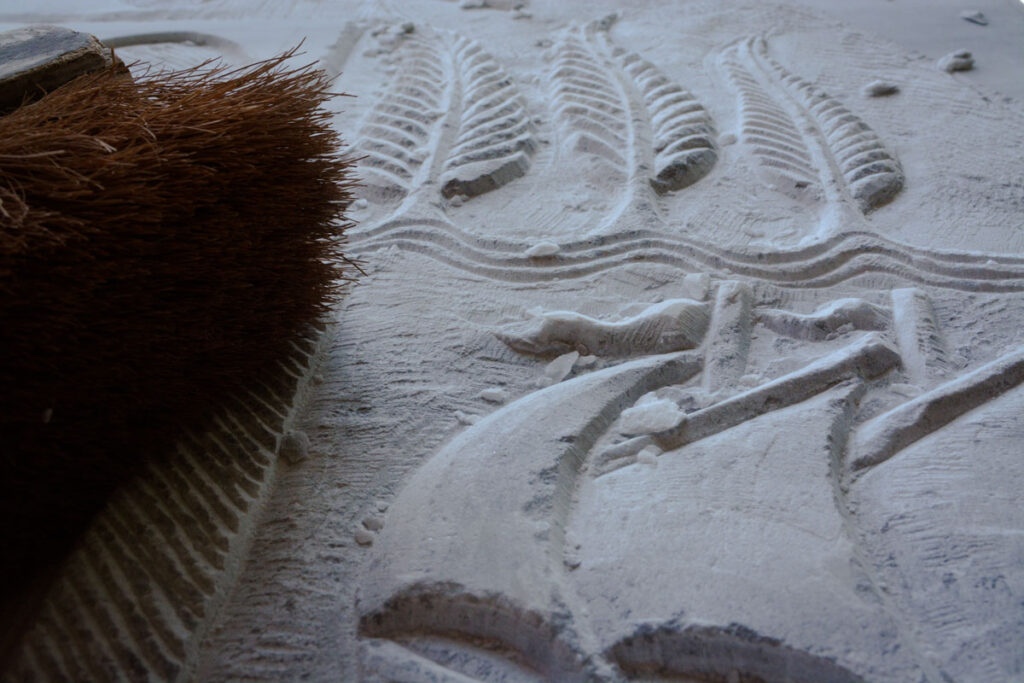
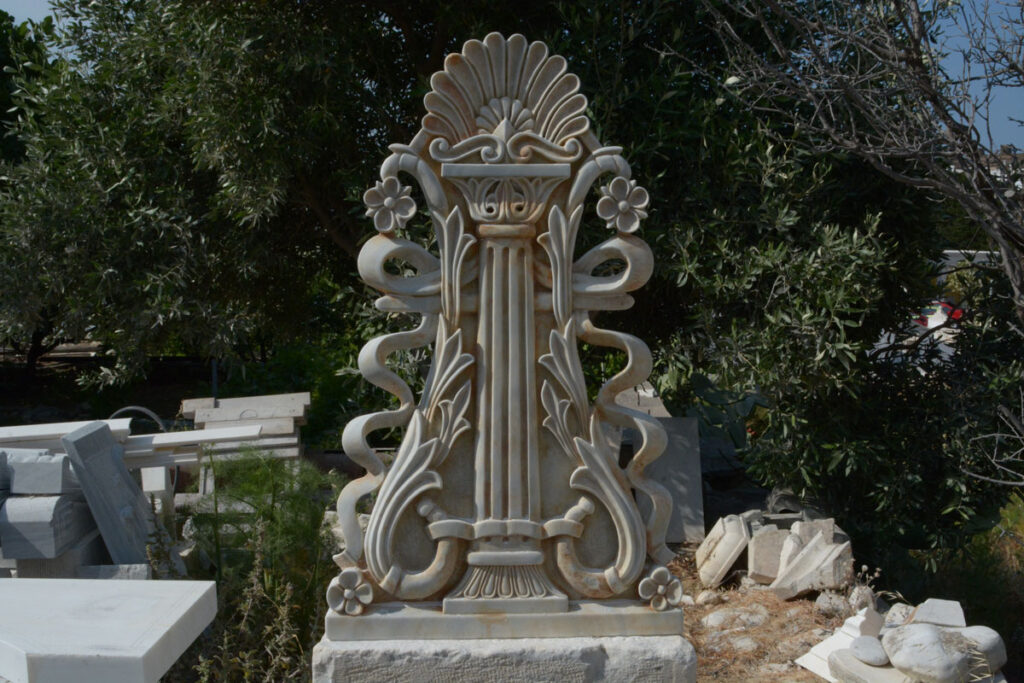
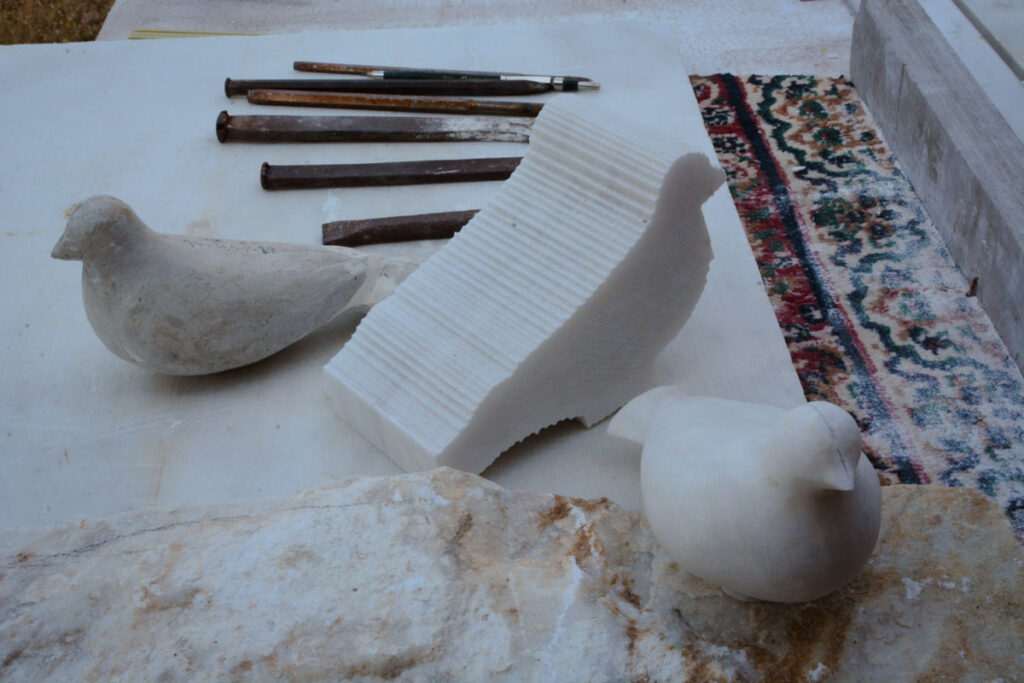
Samples of works by Lambros Diamantopoulos Photos by Alexandra Grypari
Marble craft
Products or in general material objects (handicrafts, tools, ritual or non-religious utensils, products, food, etc.) resulting from the performance or exercise of the APC element.
Marble products are classified based on their use into: (a) tools and utensils, (b) architectural applications, and (c) marble or stone carvings.
Tinian Marble Crafts
The General Conference of the Convention for the Safeguarding of the Intangible Cultural Heritage, at its 10th annual session (Namibia, November 30-December 4, 2015), on Wednesday, December 2, 2015 approved the inscription of the Tinian Marblework on the Representative List of the Intangible Cultural Heritage of Humanity.
The inclusion of Tinian Marble Art in the Catalog of the most characteristic manifestations of the intangible cultural wealth of humanity gives the opportunity to highlight some of the many aspects of this centuries-old folk art: the life stories of the local folk craftsmen, the oral traditions associated with the art , the customary functions and practices that accompany it, but also its importance for the collective memory and identity of the Tinians themselves. And of course, the works of Tinian artists themselves, the fruit of incomparable craftsmanship and aesthetics with very deep roots in space and time.
Bibliography
The research is based on data found among others in the books of Florakis A., 2013, “The “gyftika” of Oxo Meria Tinos forges and smithies in the 19th and 20th centuries”, Athens: Fraternity of Tinians in Athens, Karali M., 2002, ” The rural dwellings in Exomeria of Tinos”, Athens: Cultural technological foundation of тне Hellenic bank of industrial development, Moschatos A., 2000, About the Island of Tinos (1855), Athens: Society of Tinian Studies, Collective volume, 1979, Ethnography, Athens: Peloponnesian Folklore Foundation, Florakis A., 2018, “Old quarries and marble splitters of Tinos” Athens: Piraeus Bank Group Cultural Foundation (PIOP), Collective volume, 2009 “Tetradia Exomerias” Athens: edited by Kostas Danousis, Collective volume, 2009 “Memoirs of Panormos” Athens: edited by Kostas Danousis, Collective volume, 2024 “Navigare necesse est honor to Kostas Danousis”, Athens: Fraternity of Tinians in Athens, in exhortations and directions of Dr Florakis and Mr Danousis, in other essays such as those of Iakovos Rigos but also in interviews conducted by the NWMW team in the context of the Fe26 project – “Sculpting memory”.
More info on the traces project here