

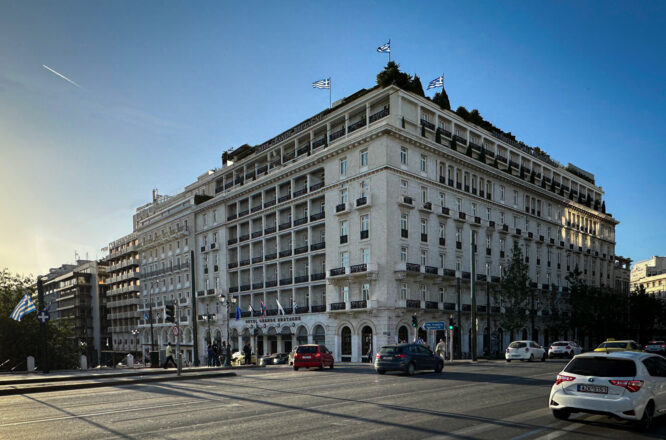
Address Vasileos Georgiou 1, Athems
Space Type Grande Bretagne Hotel
Area Syntagma
Time period1957, 20th century
The building of the Grande Bretagne Hotel was designed by the architect Theofilos Hansen and is part of the early neoclassicism. It was symmetrical on the sides, with classical elements such as columns and a peristyle, a three-story building with a rectangular plan. It began to be built in 1842 as the family residence of Antonis Dimitrios and in 1874 he settled in this Hotel Megale Britannia. In 1957, it was decided to demolish the old “Petit Palais” wing and build a new wing in its place based on the plans of the civil engineer Kostas Voutsinas. With the new wing, the ‘Great Britain’ hotel would have a total of 401 bedrooms. The workshop Andreas I. Rigos and associates collaborated with Costas Voutsinas and Vasilios Kassandra for the renovation of the Great Britain building in 1957.
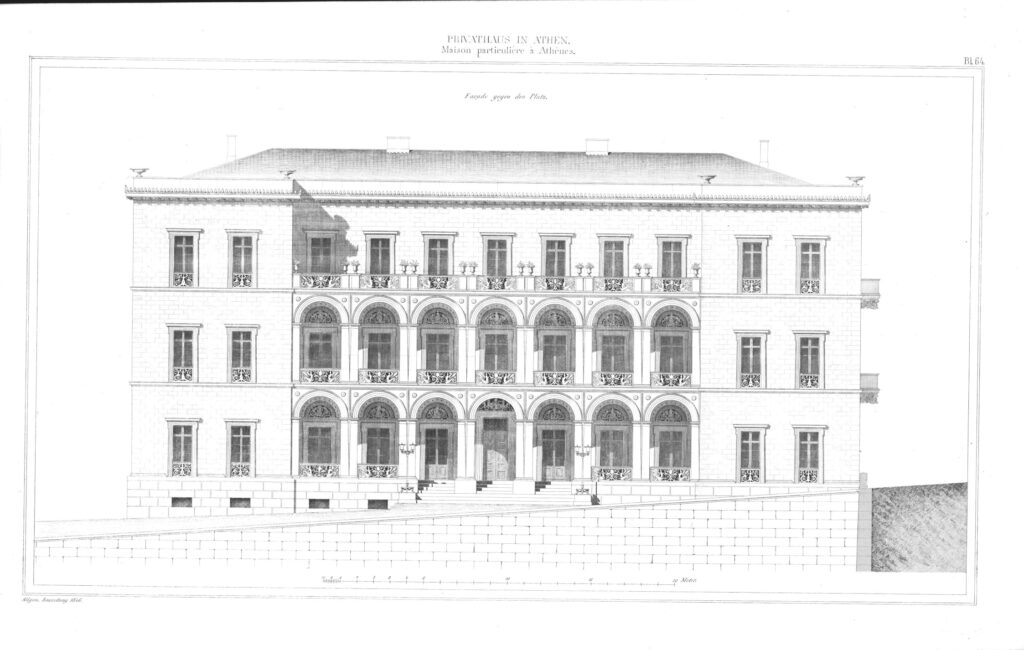
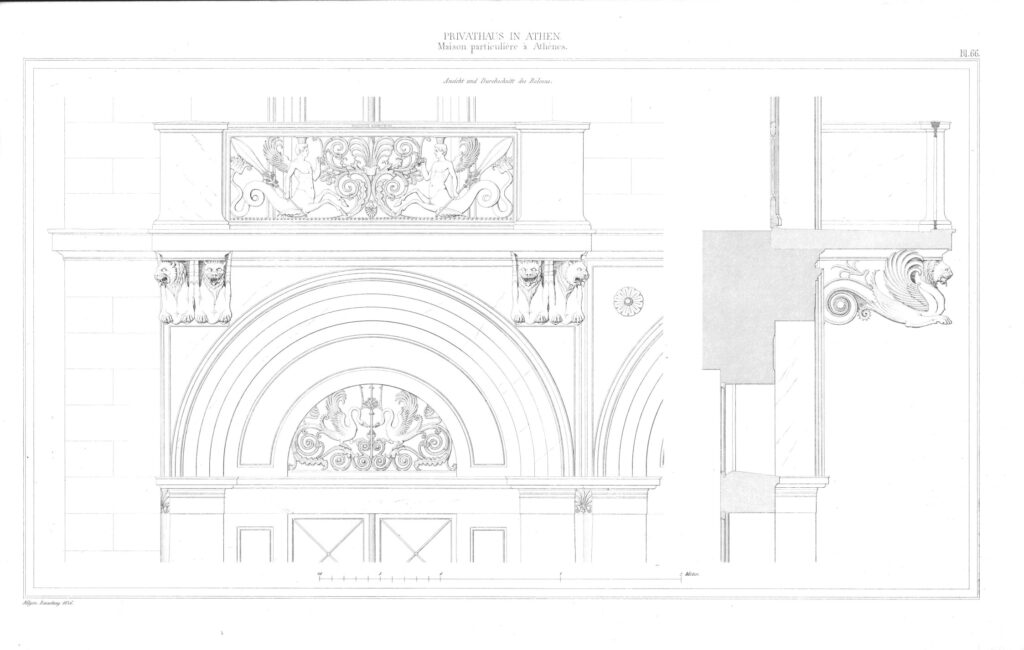
Decorative building elements
The Rigos laboratory collaborated with Costas Voutsinas and Vasileos Kassandra for the renovation of the Great Britain building in 1957.
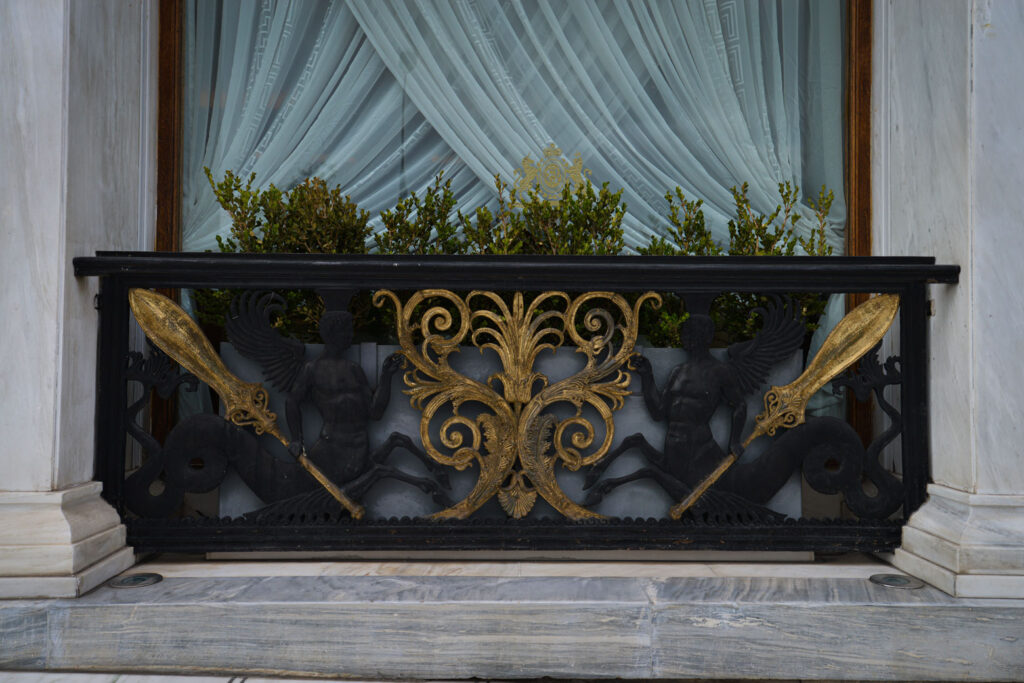
Balcony
Vasilios Kassandras made the design based on that of Theofilos Hansen. The material used was iron with a matt shade of oil paint, design – construction was done by the workshop of Andreas I. Rigos and associates.
Central staircase railing
The balustrade of the central stairwell of hand-operated balustrade was designed by Vasilios Kassandra, Architect. The material used was brass with a transparent protective coating of synthetic resin (varnish) with matt treatment, design – Manufacture laboratory Andreas I. Rigos and associates.
Laboratory Andreas I. Rigos and colleagues
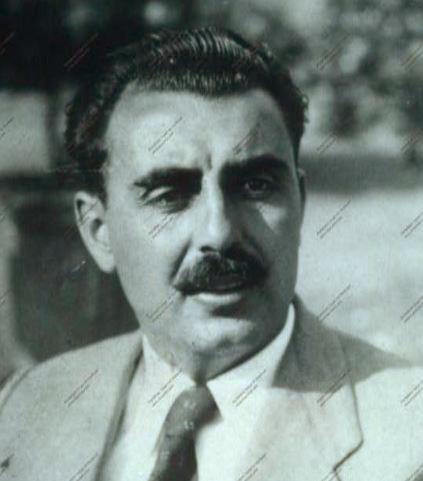
The workshop of Andreas Rigos from Pyrgos of Tinos has already established itself as the best in all of Greece, with full mechanical equipment, a separate design room and the best craftsmen, trained there from an early age. Andreas Rigos, continuation of a four-generation tradition in iron, grandson of Yiannis and son of Iakovos, develops into a genius artist of the great, organizes since 1932 a workshop where everything is designed on a one-to-one scale. He collaborates with the best-known architects of his time, such as Andreas Plumistos and Anastasios Orlandos, who either give them the idea and rarely the plan, or usually, assign everything to him in blank. The list of his works covers the whole of Greece secular, ecclesiastical, small and large, monumental works, works that in order to be constructed it is necessary to invent new methods, innovative solutions, patents. Works that today cannot be done againa
Grande Bretagne History
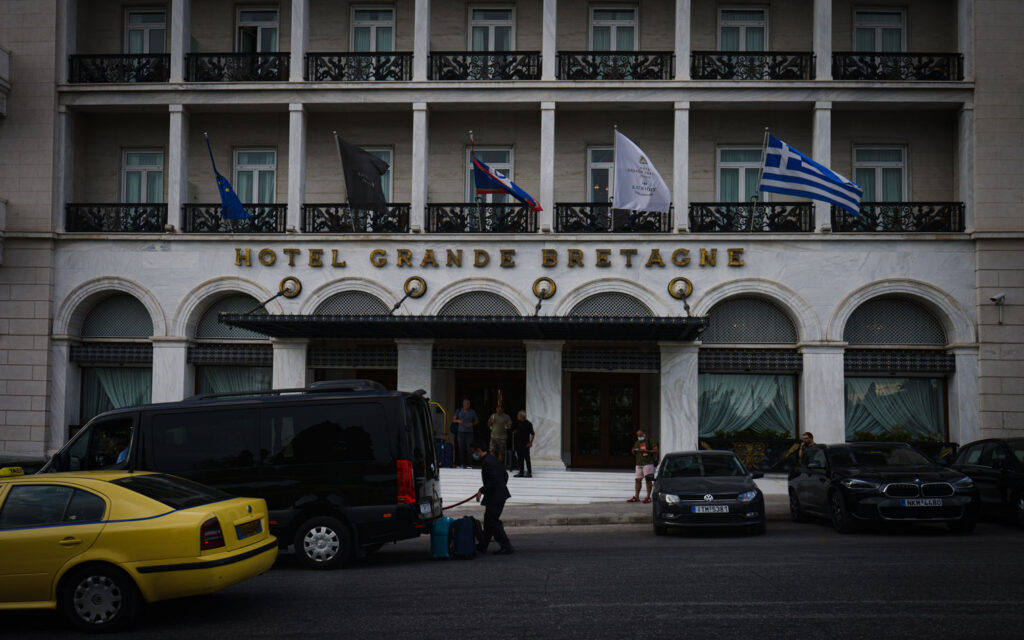
Theophilos Hansen, however, managed to “break” the strict symmetry with a freer organic arrangement of the spaces and with the parallel use of Renaissance morphological elements., which had been built to be a family residence and headquarters of the business of the Greek merchant from Trieste Antonis Dimitriou , which of course never happened. In 1874, the Great Britain Hotel, founded in 1866, was installed in the mansion, which until then was housed in another nearby mansion.
When Stathis Lampsas, with hotel studies in Paris, returns with the aim of creating a hotel similar to the European ones, the “Dimitriou Palace”, now owned by Savva Center, houses the French Archaeological School. In 1873, Lampsas and Kentros partnered and converted the Mansion into a hotel that began operating the same year under the name “Great Britain”. Within five years “Great Britain” was already the best hotel in the Near East and, by the second Olympic games of 1906, had acquired a pan-European reputation.
Theodoros Petrakopoulos, Lampsa’s son-in-law, took over the management of the hotel in 1909. During his days, the gradual expansions begin, among them the addition of a new wing on Panepistimi Street in 1930.
In 1957, it was decided to demolish the old “Petit Palais” wing and build a new wing in its place based on the plans of the civil engineer Kostas Voutsinas. With the new wing, the ‘Great Britain’ hotel would have a total of 401 bedrooms.
Theophilos Hansen
T. Hansen (1813-91) was born and studied in Copenhagen. During his nine-year stay in Athens (1837-46) he composed the architectural language that characterized Athens in the 19th century, i.e. he is essentially the main creator of Athenian Neoclassicism. In 1859 he conceived, starting with the University building, the work of his brother Christianos, the so-called “Athenian Trilogy” – the complex of the buildings of the University, the Academy and the Library – which constitutes the most important architectural ensemble of the country after the Acropolis. He also designed the Observatory, the Zappeion and a number of unfinished projects.
Kostas Voutsinas – Vasilios Kassandras
Bibliography
The research is based on data found among others in the books of Florakis A., 2013, “The “gyftika” of Oxo Meria Tinos forges and smithies in the 19th and 20th centuries”, Athens: Fraternity of Tinians in Athens, Karali M., 2002, ” The rural dwellings in Exomeria of Tinos”, Athens: Cultural technological foundation of тне Hellenic bank of industrial development, Moschatos A., 2000, About the Island of Tinos (1855), Athens: Society of Tinian Studies, Collective volume, 1979, Ethnography, Athens: Peloponnesian Folklore Foundation, Florakis A., 2018, “Old quarries and marble splitters of Tinos” Athens: Piraeus Bank Group Cultural Foundation (PIOP), Collective volume, 2009 “Tetradia Exomerias” Athens: edited by Kostas Danousis, Collective volume, 2009 “Memoirs of Panormos” Athens: edited by Kostas Danousis, Collective volume, 2024 “Navigare necesse est honor to Kostas Danousis”, Athens: Fraternity of Tinians in Athens, in exhortations and directions of Dr Florakis and Mr Danousis, in other essays such as those of Iakovos Rigos but also in interviews conducted by the NWMW team in the context of the Fe26 project – “Sculpting memory”.
More info on the traces project here